Showing posts with label best horror books. Show all posts

Wednesday, September 29, 2021

Horror List Book Review: Slaughterhouse Five

Remember this? I'm slowly, but surely, getting back to my old routines. Now that I'm done with school, I can get back to the best horror list!

I'm reading through three lists of best horror with two friends (DeAnna Knippling andM.B. Partlow), posting reviews as we go. (For more information, including a list of the books, see this post.) To see the books I've reviewed so far, you can view the list at the end of this post where I rank them.

This week I'm reviewing Slaughterhouse Five, by Kurt Vonnegut.


This is my first time reading a book by Vonnegut, and I may be hooked. His prose is quick and almost rhythmic sometimes. Fluid. There are quotable bits ("How nice--to feel nothing, and still get full credit for being alive.") and other impactful parts that aren't as quotable. 

In this book, we follow a character named Billy Pilgrim, a soldier in WWII who was present at the bombing of Dresden. The memories/scenes shared show the uselessness, hopelessness, and ineffectualness of war. There are no great battle scenes in this one. Instead, there are lost soldiers and quick captures.

The narrative jumps back and forth in time, ostensibly because Billy has become disconnected from himself and jumps to different time periods. At some point, he was kidnaped by aliens, or so he relates, much to his daughter's chagrin. The reader never knows where they'll be next, or what might cause the leap. 

A satire on war, there are comic moments, but also deeply horrifying moments that are intentionally thrown out in a lackluster way. The words "so it goes" punctuate many of these moments.

The horror in this lies in the psychological aspects of war and what humans do to each other. Understated and almost comical at times, the horror is still there.

I'm glad I finally read this one after decades of hearing about it. It's definitely a lesson in writing horror that doesn't look like horror on the outside.

Have you read Vonnegut? What's your favorite book by him? Have you read this one? What did you think?

May you find your Muse.

Thursday, January 16, 2020

2020 Rah Rah Rah! Plus Horror Book Review: 120 Days of Sodom & Zombie

At this time of year, I'm usually reviewing my goals from the previous year to see what I finished, what I scrapped, and what I need to carry forward. However, a lot happened last year that kept me from getting much of anything done, and I've decided it's not worth looking back on those goals, as it would just serve to make me feel bad about what I wasn't able to accomplish. 

Instead, I'm making some simple, but useful, goals, with the intention of setting up a base to grow from through the year. Basically, I want to get things done, but I also want to be kind to myself concerning expectations. This is a year of healing as much as anything else.

2020 Goals:

Write at least one day a week.
Stay on top of submissions.
Release a collection.
Blog at least twice per month.
Read two craft books.
Walk regularly.
Read a lot of fiction!
Take some fun pictures.

Of course, I can't do anything about the much loftier goals in my head, but whenever I look back at these goals, I want to feel like I'm doing what I expected, at least.

Moving on, I've got two best horror reviews to do, and I figured instead of doing those as individual posts as I've been doing the last couple years, I'll just add them to other posts. Before I jump into those, here's a snapshot of some of the books I've read the last couple months:


Ebooks I've read include: The False Inspector Dew (Peter Lovesey), Clowns vs. Spiders (Jeff Strand), Poisoned by the Pier (Ellen Jacobson), The Haunted Forest Tour (Jeff Strand), Creepers (David Morrell).

My favorites from the above:

Salvage the Bones - Jesmyn Ward
Gorgeously written, this book is set over the course of several days leading up to Hurricane Katrina hitting a small, rural town in Mississippi. As the storm brews and grows, so do the struggles of the main characters, siblings whose mother has died and whose father is sunk in his addiction, leaving them to fend for themselves. A story about family, relationships, deep poverty, and so much more.

Trevor Noah: Born a Crime - Trevor Noah
With his characteristic candor and humor, Noah talks about his youth in South Africa, where his very existence is a crime. His mother does her best with a child who's a bit of a troublemaker (but also charming, innovative, and deeply intelligent.) I was in turns touched, amused, shocked, and sad. I'd like to listen to the audiobook read by Noah, himself.

The False Inspector Dew - Peter Lovesey
This was the fluff book I read after FINALLY finishing The 120 Days of Sodom (review below). It was a light murder mystery, with some solid twists. A man takes on a false identity aboard a ship bound for America. The identity of a famous police inspector. When a body is found in the water, he's called upon to solve the crime. After all, that's his wheelhouse, right? Clever and fun, a delightful break I sorely needed.

Unbury Carol - Josh Malerman
This one is set in the old west, which is an era I love. Described as a thriller, it qualifies as horror, as well. A woman has a condition where she goes into a state that makes her appear dead. Her husband, knowing her condition, takes advantage when she slips into this state. She's got money and fame, and he's tired of living in her shadow. Interesting characters and a hell of a ticking clock. 

Poisoned by the Pier - Ellen Jacobson
Ellen's books are always fun to read. Great cast of characters, interesting settings. Good, clean mystery fun.

Some movies I recently saw and enjoyed:


Knives Out. This is such a witty and well scripted murder mystery. Vastly engaging and amusing. Twisty and well acted.


Incident in a Ghostland. A movie hasn't kept me this tense in a long time. Not for the faint of heart. This one's horror, and though it has plenty of flaws, the suspense is incredibly well done. I had to keep forcing myself to relax.

TV show I'd recommend:


My husband and I both loved Fleabag and are eagerly awaiting the next season. It's a dramedy, irreverent and often inappropriate, but also funny. The humor is quite dry, which I enjoy. You'll probably know within the first few minutes if this is the show for you or better avoided.

Okay, the part I've been avoiding: Horror List Book Review. I'm reading through three lists of best horror with two friends (DeAnna Knippling and M.B. Partlow), posting reviews as we go. (For more information, including a list of the books, see this post.)

I finished two recently--The 120 Days of Sodom, by the Marquis de Sade, and Zombie, by Joyce Carol Oates.


The 120 Days of Sodom - Marquis de Sade
I'm not sure I have anything good to say about this one. It was a struggle to read. Admittedly, I was curious to read something by Sade after having heard about him for so long. Partway through this book, I convinced myself he couldn't possibly be encouraging or supporting the horrific things happening in this book. I actually thought it might be a commentary on the elite of the time.

Nope.

I'm glad I waited until afterward to do research on him and realize I was giving him too much credit. It would have been even harder to get through if I knew what kind of person he truly was.

I really can't go in depth on this review, because of the subjects of the book. I described it to a friend as reading like it was written by a sexually deviant 8-year old with a feces fixation. There is extreme harm and mistreatment of children. Extreme. Sexual mistreatment, torture, etc. I'm going to need more distance before I can delve into what I needed to learn from this book. Do yourselves a favor: avoid this book and don't read the reviews on Amazon, because some of the readers are as bad as the Marquis. Disturbing.

Zombie - Joyce Carol Oates
This one was also deviant, but nothing like Sodom. It follows a man (I seem to recall he was 38 or so?) with a lot of mental issues. He wants to create a zombie lover by lobotomizing men he's interested in. The book is put forth in journal form. 

The writing is skillfully done in a way that brings the reader into the disorganized and frenzied mind of the killer. I imagine the writing style would drive some people crazy. Part of the horror of this book is how matter-of-fact the main character is about his plans and the results as he tries to figure out the right way to reach his goal.

CURRENTLY READING: Dave Barry's Greatest Hits (ebook) - Dave Barry
CURRENTLY WATCHING: Nightwatch Nation (Hulu)

Have you read any of the above books and/or seen any of the shows/movies? Did you set goals for 2020? Do you do long term or just short term goals? What book, movie, TV show, song, or other media would you recommend? What are you reading right now? 

May you find your Muse.

Friday, October 11, 2019

Horror List Book Review: Invisible Man


I'm reading through three lists of best horror with two friends (DeAnna Knippling and M.B. Partlow), posting reviews as we go. (For more information, including a list of the books, see this post.)


It's been almost a year since I last reviewed a book on here. Back in January, right before everything went chaotic in my life, I reviewed Naomi's Room. As with everything else, I'm trying to get back to my old normal.

This week I'm reviewing Invisible Man, by Ralph Ellison.


I'm going to be honest. When I saw this title on the list, I thought it was THE Invisible Man, which is actually by H.G. Wells. But this book is on a list of scariest books ever for very different reasons than Wells' story.

Ellison's Invisible Man is a stark look at society, individualism, identity, and, most obviously, race. The examination of race is split between two different areas: the deep South and Harlem.

I wish I'd reviewed this after first writing it. It's been probably about eight or nine months. I read it just before things went upside down. I remember the raw emotion I felt while reading this gorgeously written book. The frustration, the anger, the sadness, and a host of other emotions. But I don't remember specific examples I could pull and more precise reviews to give you.

The "horror" of this book is the way people treat other people, the things that happen that are looked past or ignored. The way we train others to be, and are in turn trained to be. The wrong we can do, and the wrong that can be done.

If I remember right, we never get a true name for the main character. This is part of his invisibility.

All I can tell you is that everyone should read this book. Written in 1952, it flows in a beautiful arrangement of words that belies what we're reading about. To close, I'll put the opening paragraph of the prologue here:

"I am an invisible man. No, I am not a spook like those who haunted Edgar Allan Poe; nor am I one of your Hollywood-movie ectoplasms. I am a man of substance, of flesh and bone, fiber and liquids--and  might even be said to possess a mind. I am invisible, understand, simply because people refuse to see me. Like the bodiless heads you see sometimes in circus sideshows, it is as though I have been surrounded by mirrors of hard, distorting glass. When they approach me they see only my surroundings, themselves, or figments of their imagination--indeed, everything and anything except me."

I rank this right there with "One Flew Over the Cuckoo's Nest" and "The Handmaid's Tale" for commentary on society and a vivid, depressing look at the resilient and downtrodden in our society. The invisible, as it were.

Now for some links. Bear in mind I'm not endorsing these, merely passing them along. Always do your own due diligence before submitting.

Accepting Submissions:

HorrorAddicts.net is seeking horror stories set in the Victorian era for Dark Divinations. 2000 to 5000 words. Pays $10. Deadline October 31.

Flash Bang Mysteries is seeking flash mysteries. 500 to 750 words. Pays $20. Deadline October 31.

Utopia Science Fiction is seeking optimistic SF. 100 to 6000 words. Pays $15.

Mura Magazine is seeking poetry, flash fiction, and visual art. Less than 1000 words. Pays $1 CAD/100 words.

Czykmate Productions is seeking horror flash and short stories (plus graphic art). Pays $2.

The Bronzeville Bee is seeking speculative fiction, crime, and YA short stories. Up to 3000 words. Pays $.05/word.

Have you ever read Ellison's Invisible Man? How about the other books I mentioned? What are your thoughts? Do you find the subject matter chilling? Any of these links of use? Anything to share?

May you find your Muse.


Friday, January 18, 2019

Horror List Book Review: Naomi's Room


I'm reading through three lists of best horror with two friends (DeAnna Knippling and M.B. Partlow), posting reviews as we go. (For more information, including a list of the books, see this post.)

This week I'm reviewing Naomi's Room, by Jonathan Aycliffe.


This was a solid ghost story. It reminded me of The Shining, due to it being about a man from the past influencing a man to harm his family. The Shining did it better, but this was a much shorter book than that one. 

Though there are explicit crimes mentioned, no major details are given, and they happen "off-stage." 

The description of the book says this is about a grieving father. It felt like that at the beginning, but by the end he's indifferent, and therefore, so am I. While I think his indifference was intentional, I would have liked to see more internal conflict from the main character, which would have engaged me more.

The writing was good and kept me reading, but the book was predictable. It never emotionally engaged me as much as it should, considering it's about a child who gets murdered to begin with, and only gets worse from there.

My Top Ten stands:


1. The Handmaid's Tale (Margaret Atwood)
2. The Girl Next Door (Jack Ketchum)
3. The Bottoms (Joe R. Lansdale)
4. The Collector (John Fowles)
5. Coraline (Neil Gaiman)
6. The Bridge (John Skipp and Craig Spector)
7. A Choir of Ill Children (Tom Piccirilli)
8. Needful Things (Stephen King)
9. 1Q84 (Haruki Murakami)
10. Rebecca (Daphne DuMaurier)


Now for some links. Bear in mind I'm not endorsing these, merely passing them along. Always do your own due diligence before submitting.

Accepting Submissions:

The First Line is seeking flash fiction and short stories beginning with a previous first line (lines are available on the website). 300 to 5000 words. Pays $25 to $50. Deadline February 1.

Unnerving Magazine is seeking horror and other forms of dark fiction. 800 to 4000 words. Pays $.03/word. Deadline February 1.

The New Southern Fugitives are seeking fiction, nonfiction, poetry, art, and photography. Up to 2000 words. Pays $40 to $100. 

Reader's Digest is seeking short works of various themes/types. Pay and lengths vary. 

Have you read Naomi's Room? How about Aycliffe? What did you think? Are any of these links of interest? Anything to share?

May you find your Muse.

Friday, December 14, 2018

Horror List Book Review: The Dark Descent


I'm reading through three lists of best horror with two friends (DeAnna Knippling and M.B. Partlow), posting reviews as we go. (For more information, including a list of the books, see this post.)


This week I'm reviewing The Dark Descent, edited by David G. Hartwell.


This sucker ran 1011 pages, with the final story going right up to the last page, so it took me awhile to get through it. Although that's also partially due to the fact that many of the stories are older, with slower pacing and more elaborate language, which slowed me down, too.

In this anthology, Hartwell traces the history of horror, with stories going back to the likes of William Faulkner, Walter de la Mare, and Algernon Blackwood. The stories went through the mid-eighties, with stories by Stephen King, Clive Barker, and Dennis Etchison, with many more in between. Instead of going in date order, he split the book into three parts: The Color of Evil, The Medusa in the Shield, and A Fabulous Formless Darkness.

The middle slumped for me, with many of them being older, more literary horror stories. I found that I enjoyed the classic ghost and haunted house stories, but others in that era left me unsatisfied. The other two sections were livelier, and the closing story was a strong finish.

As big as this book was, it would take me forever to do a full, real review of this, so what I'd like to convey, in general, is that this is a magnificent collection of stories to read if you're fond of the horror genre or work within it. I may not have loved every story, but I learned a lot about the history of horror and how it's been shaped and changed through the years. There was a lot more cleverness in some of the older stories compared to the harder twist ending we employ now (though the twist was strong back then, too). I got to read classics I wouldn't have read elsewhere. It was a strong set of stories, and they all deserved a place in the history of horror.

Some of my favorites:

"A Little Something for us Tempunauts," by Philip K. Dick
"The Beckoning Fair One," by Oliver Onions
"What Was It?" by Fitz-James O'Brien
"The Beautiful Stranger," by Shirley Jackson
"The Willows," by Algernon Blackwood
Mackintosh Willy," by Ramsey Campbell
"The Signal Man," by Charles Dickens
"Crouch End," by Stephen King
"Seaton's Aunt," by Walter de la Mare
 "The Repairer of Reputations," by Robert W. Chambers
"The Yellow Wallpaper," by Charlotte Perkins
"Born of Man and Woman," by Richard Matheson
"Good Country People," by Flannery O'Connor
"Dread," by Clive Barker
"Josh Charrington's Wedding," by E. Nesbit
"If Damon Comes," by Charles L. Grant
"The Bright Segment," by Theodore Sturgeon
"There's a Long, Long Trail A-Winding," by Russell Kirk
"The Whimper of Whipped Dogs," by Harlan Ellison
"The Summer People," by Shirley Jackson
"The Reach," by Stephen King

I think it would have been nice to have them in date order to really suss out the changes and trends, but with this many stories, it probably made sense to split them out differently. It had to have been quite a job curating all of these stories. Some no longer had copyright, but most did. And I discovered authors I'd heard of, but never really read, who I'd like to read more of.

My Top Ten stands:

1. The Handmaid's Tale (Margaret Atwood)
2. The Girl Next Door (Jack Ketchum)
3. The Bottoms (Joe R. Lansdale)
4. The Collector (John Fowles)
5. Coraline (Neil Gaiman)
6. The Bridge (John Skipp and Craig Spector)
7. A Choir of Ill Children (Tom Piccirilli)
8. Needful Things (Stephen King)
9. 1Q84 (Haruki Murakami)
10. Rebecca (Daphne DuMaurier)


I'm not sure which book I'll be reviewing next.

Have you read this collection? Are any of these stories familiar to you? Would you read a 1000+ page book of short stories?

May you find your Muse.

Friday, November 16, 2018

Horror List Book Review: The Resort


I'm reading through three lists of best horror with two friends (DeAnna Knippling and M.B. Partlow), posting reviews as we go. (For more information, including a list of the books, see this post.)


This week I'm reviewing The Resort, by Bentley Little.

Bentley Little has a formula that's worked for him for quite some time. He takes a normal person (or family, in this case), sticks them somewhere seemingly normal, even idyllic, then all hell breaks loose. Things go terribly wrong. That's precisely what happens here.

A family goes to a resort in the Arizona desert. They've gotten a deep discount. Weird things start happening right away, including getting back to their hotel room to discover someone else is in there. The management has to convince this someone to let them in long enough to get their things, and they're given a new room.

The little things build for quite some time, and we see different POVs, but this family provides the bulk of the POVs. The adults are having one set of experiences, while the kids have others. The vacation sounds great until everything goes nuts.

When it goes nuts, it goes full Lord of the Flies in the Overlook Hotel nuts. Animalistic behavior takes over some of the residents of the resort, and it's normals against psychos. There's full on violence and odd sexual behavior. The family tries to escape, but the resort throws barriers in their way.

I had certain expectation for a Little novel, and they were met. However, the ending was overly simplistic and the violence and behavior over the top. Still, I accepted the behavior until being disappointed in the end. I would have liked to see a real resolution.

Expect absurdity, violence, and odd, over the top characters if you read this.

My Top Ten:  

1. The Handmaid's Tale (Margaret Atwood)
2. The Girl Next Door (Jack Ketchum)
3. The Bottoms (Joe R. Lansdale)
4. The Collector (John Fowles)
5. Coraline (Neil Gaiman)
6. The Bridge (John Skipp and Craig Spector)
7. A Choir of Ill Children (Tom Piccirilli)
8. Needful Things (Stephen King)
9. 1Q84 (Haruki Murakami)
10. Rebecca (Daphne DuMaurier)

The next book I review will be Dark Descent, edited by David G. Hartwell.

Have you read The Resort? How about a different Bentley Little novel? Are you a fan? 

May you find your Muse.


Friday, October 12, 2018

Horror List Book Review: The Collector


I'm reading through three lists of best horror with two friends (DeAnna Knippling and M.B. Partlow), posting reviews as we go. (For more information, including a list of the books, see this post.)


This week I'm reviewing The Collector, by John Fowles.


This is an excellent book. It's slow and non-violent, purely psychological horror. It's told in multiple parts, with each of the characters well developed, though not necessarily likable. The first part is from the main character's point-of-view. He is an outcast, lonely, but fascinated by a woman. He buys a new place and sets up a soundproof room for her before kidnapping her and locking her in. He wants to experience her, be near her, watch her, but he has no interest in sex.

He has collected her.

The next part is from her POV. We get some insight into her reactions throughout her captivity, which we've previously seen from his POV.

Each of the POVs were distinct from each other. Though the pacing is slow, the story drags you in and pulls you along, mostly by holding the terror over you due to your own expectations and fears. As the reader, you hope for some awareness from the main character, some understanding from him that what he's doing is wrong. A sense of morality or hope. His neutrality and blandness are part of the horror.

This one has finally moved my top ten around:


My Top Ten:  

1. The Handmaid's Tale (Margaret Atwood)
2. The Girl Next Door (Jack Ketchum)
3. The Bottoms (Joe R. Lansdale)
4. The Collector (John Fowles)
5. Coraline (Neil Gaiman)
6. The Bridge (John Skipp and Craig Spector)
7. A Choir of Ill Children (Tom Piccirilli)
8. Needful Things (Stephen King)
9. 1Q84 (Haruki Murakami)
10. Rebecca (Daphne DuMaurier)

The next review will be for The Resort, by  Bentley Little. After that, Dark Descent.

Now for some links. Bear in mind I'm not endorsing these, merely passing them along. Always do your own due diligence before submitting.

Accepting Submissions:

Unlocking the Magic is an anthology seeking fantasy involving characters with mental illness. The focus is on realistic portrayals of the mental illness, not magic born of it. 3000 to 6000 words. Pays $300. Deadline November 1.

The Literary Hatchet is seeking speculative fiction flash, short stories, art, poetry, etc. 500 to 6000 words. Pays $5 to $10. Deadline November 1.

The First Line is seeking fiction and non-fiction essays with the first line, "As she trudged down the alley, Cenessa saw a small..." 300 to 5000 words. Pays $25 to $50. Deadline November 1.

Thema Literary is seeking short stories, poetry, essays, and art with the theme The Critter in the Attic. Up to 20 pages. Pays $10 to $25. Deadline November 1.

Spring Song Press is seeking steampunk short stories for Steam and Lace. 1000 to 10,000 words. Pays $.01/word. Deadline November 1.

Are any of these links of interest? Have you read The Collector or anything by John Fowles? What did you think? Anything to share? Have you been submitting?

May you find your Muse.


Friday, August 10, 2018

Horror List Book Review: Shadows


I'm reading through three lists of best horror with two friends (DeAnna Knippling and M.B. Partlow), posting reviews as we go. (For more information, including a list of the books, see this post.)

This week I'm reviewing Shadows, Edited by Charles L. Grant.


This collection is made of subtle horror, for the most part. There weren't any I hated, but there were some that left feeling pretty neutral. My favorite two stories were both by the same author, and that was Ramsey Campbell. Two others that stood out to me were The Butcher's Thumb, by William Jon Watkins, and Picture, by Robert Bloch.

I really don't have much to say. The type of horror found in this collection isn't really my favorite, so it doesn't stick with me. If you like quieter horror, you'd probably enjoy this collection. It's a strong group of successful horror authors, most of whom I've enjoyed other stories by.

My Top Ten:  

1. The Handmaid's Tale (Margaret Atwood)
2. The Girl Next Door (Jack Ketchum)
3. The Bottoms (Joe R. Lansdale)
4. Coraline (Neil Gaiman)
5. The Bridge (John Skipp and Craig Spector)
6. A Choir of Ill Children (Tom Piccirilli)
7. Needful Things (Stephen King)
8. 1Q84 (Haruki Murakami)
9. Those Who Hunt the Night (Barbara Hambly)
10. Rebecca (Daphne DuMaurier)

The next book I review will be A Scanner Darkly, by Philip K. Dick.


Friday, July 27, 2018

Horror List Book Review: Stepford Wives


I'm reading through three lists of best horror with two friends (DeAnna Knippling and M.B. Partlow), posting reviews as we go. (For more information, including a list of the books, see this post.)

This week I'm reviewing Stepford Wives, by Ira Levin.


This is one that we all probably know the story of, whether we've read it, watched one of the movie versions, or none of the above. I'm surprised it took me this long to finally read it. It should be noted that, like Bubba Ho-Tep, I believe this is a novella, not a novel. 

Stepford Wives is a clever and frightening bit of satire. Like The Handmaid's Tale, I'm sure it's more horrifying for female readers than male, because it gets to the root of gender imbalance and how tenuous our current hold on things really is. How easy it would be to lose it all and become powerless again, controlled by the men in our lives. (If you'd like a good horror film that shows a bit of when this happened in real life in Iran, watch Under the Shadow on Netflix. Though there's a paranormal element, the real horror is the female main character having to adapt to living in a completely different world where she's become a second class citizen and can't even flee her home without a head covering on without being chided and threatened for it. It's chilling.)

The premise is technically absurd, but that's part of the satire. And Levin makes it convincing. He never goes into the nitty gritty details of how any of it's being done, but he doesn't need to.

 I expected the main character's husband to already be a sexist jerk at the beginning, but the thing is, he supports Joanna in her feminism, in her drive to fight the good fight. He supports the fact that she isn't a perfect homemaker, and that her photography career is worthwhile. And that's what makes it so hard to understand when the signs start pointing to him wanting a perfect Stepford-style wife, who does nothing but please her husband, clean the house, cook, and take care of the children. I actually found his turning to the dark side far harder to stomach than the concept of perfect wife-bots, but that's probably because the dread of having one's husband turn on them despite a seemingly good marriage plants seeds of doubt. It hurts to read, really. Just like The Handmaid's Tale.

This is a fairly light read, quick, witty, simple. But there's so much buried beneath the surface. Definitely a worthwhile read, even if you feel you already know the story.

My Top Ten: 


1. The Handmaid's Tale (Margaret Atwood)
2. The Girl Next Door (Jack Ketchum)
3. The Bottoms (Joe R. Lansdale)
4. Coraline (Neil Gaiman)
5. The Bridge (John Skipp and Craig Spector)
6. A Choir of Ill Children (Tom Piccirilli)
7. Needful Things (Stephen King)
8. 1Q84 (Haruki Murakami)
9. Those Who Hunt the Night (Barbara Hambly)
10. Rebecca (Daphne DuMaurier)

No idea what book on the list will be next.


Friday, July 13, 2018

Horror List Book Review: Ghost Road Blues


I'm reading through three lists of best horror with two friends (DeAnna Knippling and M.B. Partlow), posting reviews as we go. (For more information, including a list of the books, see this post.)

This week I'm reviewing Ghost Road Blues, by Jonathan Maberry.


This is the first book in the Pine Deep trilogy. Unfortunately, there's no real resolution of story in the first book, which is frustrating, because it leaves everything hanging. What I like to see in a trilogy or series is a resolution of a significant plot arc at the end of the book, with other plot lines unresolved for the next book(s).

Maberry creates characters you can really like and characters you can really hate. The evilness of the bad guys is significant, with no real redeeming features. This struck me, because I was recently on a panel where a psychologist who had worked in a mental health facility looked out at the audience and said something along the lines of, "I envy those of you who think that bad people are merely evil." They were less scary to me when all these awful people were just pure evil and tied to the main plot. There wasn't a gray area with them.

I liked the character of Crow, our main good guy. And Mike, a kid whose POV we see through. The women are lackluster characters (you can keep telling me Val is a super strong woman, but when she spends most of her time crying, freaking out, and being rescued, you've just disproven that.) Up until she was put under duress, I liked Val. Even after that, I was still rooting for her, but I got frustrated with the character at times. She's smart, she's loyal, she's determined, and she's strong and capable, but when Crow's around, she loses that. She exists to be rescued by men in the story.

Something that bothered me was that the main "monster" is hidden from us in this first book. The supernatural is brought into the story early enough, but the something more being hinted at (we don't know for certain what it is, though a blurb on the next book gave it away--whoops) feels like it's coming in way too late in the storyline. There should have at least been seeds planted earlier.

However, having said all that, Maberry can really paint a scene. I became deeply embroiled in the setting. The pacing is also good, and the setup such that I want to see it all resolved. While this wasn't my favorite book, it drew me in and I didn't hate-read it.

My Top Ten remains the same.

My Top Ten: 


1. The Handmaid's Tale (Margaret Atwood)
2. The Girl Next Door (Jack Ketchum)
3. The Bottoms (Joe R. Lansdale)
4. Coraline (Neil Gaiman)
5. The Bridge (John Skipp and Craig Spector)
6. A Choir of Ill Children (Tom Piccirilli)
7. Needful Things (Stephen King)
8. 1Q84 (Haruki Murakami)
9. Those Who Hunt the Night (Barbara Hambly)
10. Rebecca (Daphne DuMaurier)

The next book I review will be Stepford Wives, by Ira Levin.

Friday, April 27, 2018

Horror List Book Review: Ghoul


I'm reading through three lists of best horror with two friends (DeAnna Knippling and M.B. Partlow), posting reviews as we go. (For more information, including a list of the books, see this post.)

This week I'm reviewing Ghoul, by Brian Keene.


First, a warning to anyone who might consider this book that it involves quite a few "triggers": women being captured and raped, violence against a dog, domestic violence, and harm toward children.

I thought this was a good book with horror found in more than the title ghoul. In fact, the ghoul is really the least of this novel. Humans can be awful, but they're also complicated. As you can see from the warnings above, Keene hits on a lot of sore subjects for people. If one thing doesn't bother, surely another will. 

At first, I thought the lessons to come would be too heavy handed, due to the issues revolving around a couple of the characters, which just felt blatant. The way they're laid out at the beginning made me roll my eyes. But as the story progressed, I felt like the characters were well built, each of their stories coming into play with the main story line. Keene has a grasp on the lives of boys, the things they care about, the things they worry about, their thought processes, etc., and this shows in the book. 

The story here is a lot deeper than a monster in a graveyard. As I said above, it's really about humanity, the ills we visit upon each other, and the ways we cope. Especially young boys in shitty situations (and one in a pretty normal situation, who takes it as any young boy would).

I almost wish the epilogue hadn't existed, but it meant something, it was stark and honest, so it had its place. Don't expect a happy ending tied up in a neat bow.

My top ten remains the same.

My Top Ten:


1. The Handmaid's Tale (Margaret Atwood)
2. The Girl Next Door (Jack Ketchum)
3. The Bottoms (Joe R. Lansdale)
4. Coraline (Neil Gaiman)
5. The Bridge (John Skipp and Craig Spector)
6. A Choir of Ill Children (Tom Piccirilli)
7. Needful Things (Stephen King)
8. 1Q84 (Haruki Murakami)
9. Those Who Hunt the Night (Barbara Hambly)
10. Rebecca (Daphne DuMaurier)

Now for some links. Bear in mind I'm not endorsing these, merely passing them along. Always do your own due diligence when submitting.

Accepting Submissions:

Broadswords & Blasters is seeking pulp fiction. 2000 to 5000 words. Pays $15.

Vanity Projection is seeking humorous and satirical short pieces. Pays $5.

The Writing District holds a free writing contest very month. Up to 3000 words. The winner gets $50. Deadline is the last day of each month.

Poetry Foundation is seeking poetry. They pay $10 per line. Also accepting visual poetry now.

Flash Fiction Online is seeking flash fiction. Open genre. 500 to 1000 words. Pays $60.


Check out my horror short story collection, Blue Sludge Blues & Other Abominations, available in paperback and e-book from Amazon, Barnes & Noble, Nook, Smashwords, and Apple. See my Publications tab for more information.

Have you read this book? Have you read anything by Brian Keene? Any of these links of interest? Anything to share? Have you been submitting or querying anything?

May you find your Muse.


Friday, April 13, 2018

Horror List Book Review: The Bridge

I'm reading through three lists of best horror with two friends (DeAnna Knippling and M.B. Partlow), posting reviews as we go. (For more information, including a list of the books, see this post.)


This week I'm reviewing The Bridge, by Craig Spector and John Skipp. (I had said I'd be reviewing "Ghoul," by Brian Keene next, but I forgot I said that, and I picked this one up from the pile instead.)


I'm not new to splatterpunk, but I am new to eco-horror. Oddly, eco-horror is not my favorite sub-genre (I say oddly, because it's just a different type of apocalypse, and I enjoy those). However, I enjoy the way they wrote enough that being brow-beat about the environment (not that I disagree, but I tend to be turned off when it feels like I'm being preached to) couldn't put me off the book.

They had such a fantastic way with words that at times it was almost literary, but then the gross-out factor was high. The descriptions were disgusting and amusing, often at the same time. They elicited groans and "ew"s from me several times, which I love. It was quite a visceral experience.

The book was about toxic sludge pollution becoming sentient and wiping out a town. It takes over people and uses them to grotesque purpose. There were a lot of characters to keep track of, so though the good guys stood apart in my head and stayed separately identifiable, some of the bad guys blended together for me at times, because they're all being taken over, which means they're the Overmind, but maybe it's intentional that they blended together, though they retained their original names.

Despite the minor complaints above I liked this one enough that it's going in my top ten. Now to figure out where...


My Top Ten:

1. The Handmaid's Tale (Margaret Atwood)
2. The Girl Next Door (Jack Ketchum)
3. The Bottoms (Joe R. Lansdale)
4. Coraline (Neil Gaiman)
5. The Bridge (John Skipp and Craig Spector)
6. A Choir of Ill Children (Tom Piccirilli)
7. Needful Things (Stephen King)
8. 1Q84 (Haruki Murakami)
9. Those Who Hunt the Night (Barbara Hambly)
10. Rebecca (Daphne DuMaurier)


Okay, maybe next time it'll be "Ghoul," by Brian Keene.

Have you read any Skipp/Spector books? How about eco-horror? What do you think about it? What Skipp/Spector book would you recommend?

May you find your Muse.

Friday, January 26, 2018

Horror List Book Review: Invasion

I'm reading through three lists of best horror with two friends (DeAnna Knippling and M.B. Partlow), posting reviews as we go. (For more information, including a list of the books, see this post.)

This week I'm reviewing Invasion, by Robin Cook.


This was Cook's first foray into science fiction; normally he writes medical thrillers. He writes an open letter about it in the introduction. It shows in the basic layout of the sci-fi/horror elements, but he brings something new to it all with his knowledge of medical topics, which led to some fascinating information throughout.

I was frustrated with how stilted the writing came across at times, especially in the almost complete lack of contractions. Even the character dialogue was done without contractions, which made it come across as wooden. It slowed my reading.

The pacing was a bit slow to start with, though the aliens take their first victim right off. The slower build up seemed legitimate for the most part, though, as the invasion at first seems like an odd flu virus at first, making it so authorities wouldn't listen when people got wise to the fact that those who recovered from the flu virus acted oddly afterward. This did a good job of isolating the characters and making them fight on their own.

Overall, it was an interesting book. The writing might have gotten to me more if he hadn't done a good job with the characters, the conflict, and the medical details. There were times the characters came across a bit cliched, but for the most part they were done well enough to make me root for them and stay interested in the story.

I'm not sure how I feel about the ending. It seems a bit simple, considering how long the book was. However, sometimes there's a satisfaction in the simplicity of a cure.

My Top Ten remain unchanged:

My Top Ten:

1. The Handmaid's Tale (Margaret Atwood)
2. The Girl Next Door (Jack Ketchum)
3. The Bottoms (Joe R. Lansdale)
4. Coraline (Neil Gaiman)
5. A Choir of Ill Children (Tom Piccirilli)
6. Needful Things (Stephen King)
7. 1Q84 (Haruki Murakami)
8. Those Who Hunt the Night (Barbara Hambly)
9. 20th Century Ghosts (Joe Hill)
10. Rebecca (Daphne DuMaurier)

My next book review will be of Ghoul, by Brian Keene.

Have you read anything by Robin Cook? Does he use contractions in his other books? If you've read both his medical thrillers and his science fiction, how would you compare the two?

May you find your Muse.
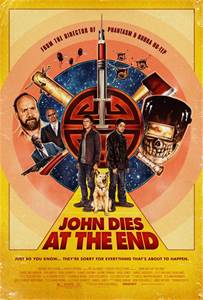
Friday, January 12, 2018

Horror List Book Review: John Dies at the End

I'm reading through three lists of best horror with two friends (DeAnna Knippling and M.B. Partlow), posting reviews as we go. (For more information, including a list of the books, see this post.)

This week I'm reviewing John Dies at the End, by David Wong.


This is going to be another brief review, because I actually read the book months ago, forgetting it was on my list, and gave it away at a Halloween book exchange, so I can't even reference it. Whoops!

"John Dies at the End" is an oddball journey with Lovecraftian themes. There are some real creepy moments, but also a lot of humor. This was originally published online, if I'm remembering right, and the spelling and grammar shows it, but the voice of the author is enjoyable enough to ignore that (for the most part). David Wong is not only the author (a pen name), but the main character, and he's relating to you in first person what occurred when he and his friend John got dosed with soy sauce, a drug that does insane things to their brains. Suddenly, they're seeing things in a whole new way, things that others can't.

It's juvenile and raunchy at times, but still funny. It's crazy and random. I figure it's worth a read for the fact that it's different than other books out there, though you won't come away feeling like you've read great literature.

As I've changed my ratings to only keep a Top Ten, nothing has changed this week. My Top Ten are still:

My Top Ten:

1. The Handmaid's Tale (Margaret Atwood)
2. The Girl Next Door (Jack Ketchum)
3. The Bottoms (Joe R. Lansdale)
4. Coraline (Neil Gaiman)
5. A Choir of Ill Children (Tom Piccirilli)
6. Needful Things (Stephen King)
7. 1Q84 (Haruki Murakami)
8. Those Who Hunt the Night (Barbara Hambly)
9. 20th Century Ghosts (Joe Hill)
10. Rebecca (Daphne DuMaurier)

Not sure what I'm reading next, but I've got a stack, so yay!

Have you read this or seen the movie? What did you think? Will you be reading the sequels?

May you find your Muse.

Friday, December 15, 2017

Horror List Book Review: Night Visions

I'm reading through three lists of best horror with two friends (DeAnna Knippling and M.B. Partlow), posting reviews as we go. (For more information, including a list of the books, see this post.)

This week, I'm making a change. Ranking the books has gotten increasingly harder, and I'm not even sure I'd still rank them the same anymore. Over the course of my reading from this list, I've learned a lot about the different styles of horror. As a lifelong lover of horror, I thought I had it down, but I hadn't been exposed to some of these styles before. Horror covers a lot of ground, and there's quite a bit of horror that isn't acknowledged for what it is, instead being categorized in a secondary genre (for example, a sci-fi horror story being classified as sci-fi, not horror). 

At the beginning of this process, I was opinionated on certain books not being horror, because they didn't follow the "rules" I had for the genre. If I re-read and reviewed them all over again, there would be some changes. To me, that says this whole project has been beneficial to me as a reader, but also as a horror author. It's been a learning process.

Instead, I'll be keeping track of the top ten. For simplicity's sake, the top ten will be novels and collections only, not anthologies. I'll still review the anthologies, but they will not place in the top ten.

Moving on, this week I'm reviewing Night Visions: In the Blood, edited by Alan Ryan. 


This is an unusual anthology, in that there are only three authors, each with several stories. There was a series of Night Visions anthologies done this way, but this was the first one. I'd love to see this formula continued today. It gave a larger taste of authors who were often found in the major anthologies of the day, but just one story at a time. The setup of Night Visions allowed readers to immerse themselves in each author's style, and to discover them in a way a single story didn't allow.

I'm not going to go into individual stories (mostly because I handed the book over to a friend before reviewing, which was a mistake, because I need to be able to thumb through the book and refresh my memory when it's short stories), but I can say my favorite author in the bunch was Charles L. Grant, followed by Steve Rasnic Tem, then Tanith Lee. They're each skilled, but the gothic style of horror Lee writes isn't my favorite, though it's gorgeous. Her stories were beautifully written, but they were slower paced and didn't end up interesting me as much as the others. Grant and Tem both wrote stories that were more straight forward. I think Tem and Grant wrote similarly enough for it to make sense that they were together in this anthology, but that Lee would have been able to shine more if combined with other gothic horror authors. Her style seemed more literary in its focus on the words and the style versus the more straight forward story. I think I would have liked her stories more if they'd been matched up with different authors, rather than at the end of this collection, with me firmly settled in to the previous styles.

Still, I loved the concept of this book, and I intend to check out any others I can acquire. There were some amazing authors collected in this series of anthologies. 

My Top Ten:

1. The Handmaid's Tale (Margaret Atwood)
2. The Girl Next Door (Jack Ketchum)
3. The Bottoms (Joe R. Lansdale)
4. Coraline (Neil Gaiman)
5. A Choir of Ill Children (Tom Piccirilli)
6. Needful Things (Stephen King)
7. 1Q84 (Haruki Murakami)
8. Those Who Hunt the Night (Barbara Hambly)
9. 20th Century Ghosts (Joe Hill)
10. Rebecca (Daphne DuMaurier)

Next review will be of John Dies at the End.

Now for some links. Bear in mind that I'm not endorsing these, merely passing them along. Always do your own due diligence before submitting.

Accepting Submissions:

WolfSinger Publications is seeking short horror stories for the anthology Haunted Hotel. 1000 to 7000 words. Pays $5 plus royalties. Deadline January 15.

Chicken Soup for the Soul is looking for personal stories in the themes Christmas and Holiday Collection, The Empowered Woman, and The Miracle of Love. Up to 1200 words. Pays $200. Deadlines are between January 10 and January 15.

Outlook Springs is seeking fiction, nonfiction, and poetry. Pays $10 for poems, $25 for prose. Deadline January 15.

Myriad Paradigm is seeking short speculative fiction for the anthology Mind Candy 2.0. Prefer science fiction and aren't looking for anything too dark. Up to 5000 words. Pays $.06/word. Deadline January 15.

Of Interest: 

If you're looking for recommended word counts per genre, this Writer's Digest article by Chuck Sambuchino: Word Count for Novels and Children's Books: The Definitive Post.


And for those looking for horror to read, here's 25 Horror Readers on the Most Gut Twisting Book You Could Buy

Have you read any of the Night Visions series? Or anything similar? Have you read any of the three authors in this anthology? Any of these links of interest? Anything to share?

May you find your Muse.