Showing posts with label book reviews. Show all posts

Wednesday, February 24, 2021

Media Roundup

 It's once again been a while. School keeps me busy, as does life these days. But I'm trucking along, and I'm still reading every night. I kinda' have to if I want to have any chance at sleeping.

BOOKS

The Glass Forest, by Cynthia Swanson


A mystery about a disappearance and a...suicide? Murder?

The author wraps in a character's story leading up to her disappearance, interspersed with the current investigation of her husband, found dead in the forest behind their house. Skillfully done. A story that will touch your heart and fold you into it as you try to figure out what's actually happening. But sometimes the secret keepers are really good at keeping those secrets.

Hidden Valley Road: Inside the Mind of an American Family, by Robert Kolker


This one was fascinating, not just for its study of a family where a majority of their kids have schizophrenia, but because of the glimpses of history it gave me of the city I live in. I couldn't help but feel deeply for the mother, left to deal with all these kids, many of whom had schizophrenia in varying degrees of severity, by a man who was more intent on getting what he wanted than caring for the family he had. The story of this family is truly heartbreaking, but the studies done on them have and will help future generations.

The Five: The Untold Lives of the Women Killed by Jack the Ripper, by Hallie Rubenhold


The research that went into this is astounding. A truly human look at the canonical five victims of Jack the Ripper. If you're looking for a book about Jack, this isn't the one. This is a set of mini biographies about the victims, most of whom were wrongly stereotyped as sex workers. The author pulls no punches, giving an honest look at the troubled lives of these women. The streets of England were cruel, even without a homicidal maniac running around. How anyone survived is beyond me.

Monster, She Wrote: The Women Who Pioneered Horror and Speculative Fiction, by Lisa Kroger and Melanie R. Anderson


This is a collection of mini biographies of the women who shaped horror and speculative fiction. It includes recommendations of books each one wrote, plus similar books if you'd like to explore more. 

Lucky Man: A Memoir, by Michael J. Fox


I grew up with Michael J. Fox on TV and in movies. This book traces the discovery of his Parkinson's Disease, but also his arrival in Hollywood and the shape it took. It's honest and raw. A good read if you're a Fox fan.

Mexican Gothic, by Sylvia Moreno-Garcia


A gothic horror novel set in Mexico, it's a different spin on the genre. Though it took me some time to get into the main character, Noemi, I realized that what I struggled with about the character was the very thing that made the character so real: her ability to act flighty and fickle, because that's what others around her expected. Creepy, with a setting that's a character, the book takes the reader to different world.

The Women of Brewster Place, by Gloria Naylor


Powerful. Stunning. Heartbreaking. Amazing.

This one caught me by the fingernails and dragged me along with it. The stories of several from a certain neighborhood revolve, some of them coming into contact, to give an unabashed look at the lives and struggles of black women in a troubled era. Raw, real, beautifully written. I wanted to know more.

Angel Falls, by Tess Thompson


Actually written by two women (Charlene Tess and Judi Thompson), it's a romantic suspense that focuses more on the romance, I'd say. The characters are good, especially the main character's abuela. Definitely a different spin on the usual romantic suspense. Magdalena runs a troubled resort plagued by issues. When one of those issues becomes a body in the water tank, it's clear things have escalated to a new level. Then Russell walks in out of the mountains with a backpack full of secrets. It was a little more romance than suspense for me, but once it picked up further along in the story, it grabbed my attention. Lots of little twists.

Night of the Mannequins, by Stephen Graham Jones


It all starts with a prank perpetrated by a group of teens. They dress up a mannequin and sneak him into the movie theater to trick the theater manager. But at the end of the movie, Manny gets up and walks out. Now they're dying off one by one. Is it Manny or something else? A nice, short piece of horror that will twist you up and horrify you.

Flipped: A Jillian McElroy Flipping Mystery, by K.A. Olgren


A cozy mystery that takes place during a house flip. Jillian McElroy knows what she wants, and she's determined to make it happen. But a villainous neighbor wants to stop her. What happened to the previous owner? What's the neighbor after? There's a great sense of humor and a fun cast of characters.

MOVIES

The Map of Tiny Perfect Things
(Amazon Prime)


This film is delightful, but also sad once you get down to the background. Two teens are stuck in a time loop, repeating the day over and over. Each must figure out why it's happening and try to get back to normal. Of course, plenty of shenanigans must first ensue.

Walk of Shame
(HBO Max)


I found this under "NSFW Comedy," so take that as you may. There's nothing truly naughty or dirty in it. Elizabeth Banks plays an up and coming newscaster who gets caught in the ultimate walk of shame. After getting trapped on a fire escape outside a club, having had a few too many shots, she gods home with the bartender. Sneaking out before he wakes up, she discovers her car's been towed and she has no way back in the building, because there aren't any names on the bells, just apartment numbers. Plus, the door's locked. She must find her way through the big city in the middle of the night, with nothing but her car keys since her purse was in the car and she's left her cell phone in his apartment. Mistaken for a sex worker, she gets into progressively more trouble, chased by the cops and an angry cab driver, etc. A funny, if irreverent movie.

Irma la Douce
(Amazon Prime)


This was funny, adorable, and ridiculous. Perfect for a mental escape. I'm a bit late to the game since this came out in 1963. Starring Jack Lemmon and Shirley MacLaine, he's a too-honest cop and she's a sex worker. But when he gets fired for busting the police chief in a den of iniquity (whoops), he somehow ends up as her pimp. But he wants her to himself and devises a plan with an accomplice to keep her from sleeping with other men. Eventually, it leads to a lot of trouble. A Billy Wilder film, which probably tells you some of what you need to know.

TV

Crime Scene: The Vanishing at the Cecil Hotel
(Netflix)


An at times overdramatic look at the Cecil Hotel and it's history. The Cecil is where Elisa Lamb met her mysterious fate in the water tank atop the hotel. Footage of her behaving oddly in the elevator is truly chilling every time it's played. They get down to the real details and the official call. 

The Secret of Skinwalker Ranch
(Netflix)


A "documentary" about investigating the background of Skinwalker Ranch and the reason behind all the strange events that happen there. I put documentary in quotes, because it was very dramatic and silly in some ways, but an interesting watch. If you can get past the cheesiness of the cast, it's worth a watch.

Call Me Kat
(Hulu)


A cute, lighthearted show where Mayim Bialik's character regularly breaks the fourth wall. The owner of a cat cafe, Kat gets into shenanigans on the regular.

The Crew
(Netflix)


A Kevin James show where he's NOT the buffoon. You heard me. It's a pleasant change. Does he get into dustups? Of course, but the buffoon comedy comes from a couple costars instead of him. My husband and I dipped our toes into this one with trepidation, but are both enjoying it. It's set in a NASCAR garage, with Kevin as the crew chief. The driver's an idiot, but he's good at his job. Along comes the owner's daughter, fresh out of business school and rearing to change everything. Kevin's the dinosaur who has to balance her out.

WandaVision
(Disney +)


Quirky fun that gets darker and more serious as the series progresses. Wanda and Vision are stuck in an alternate reality of some sort. Each episode of this show occurs in a different era, beginning with black and white and parodying the types of shows from each decade. The first episode is a bit Donna Reed and it keeps on going up through the last episode, which was very Modern Family. There are plenty of easter eggs for Marvel fans (many which I'm sure are escaping me). It'll be easier to watch if you're caught up on the Avenger series of films. I'd only seen the last one once, so it took me a bit of catching up at times. If you're familiar with the comics, I've heard there's tons in this show that play off the original stories.

PODCASTS

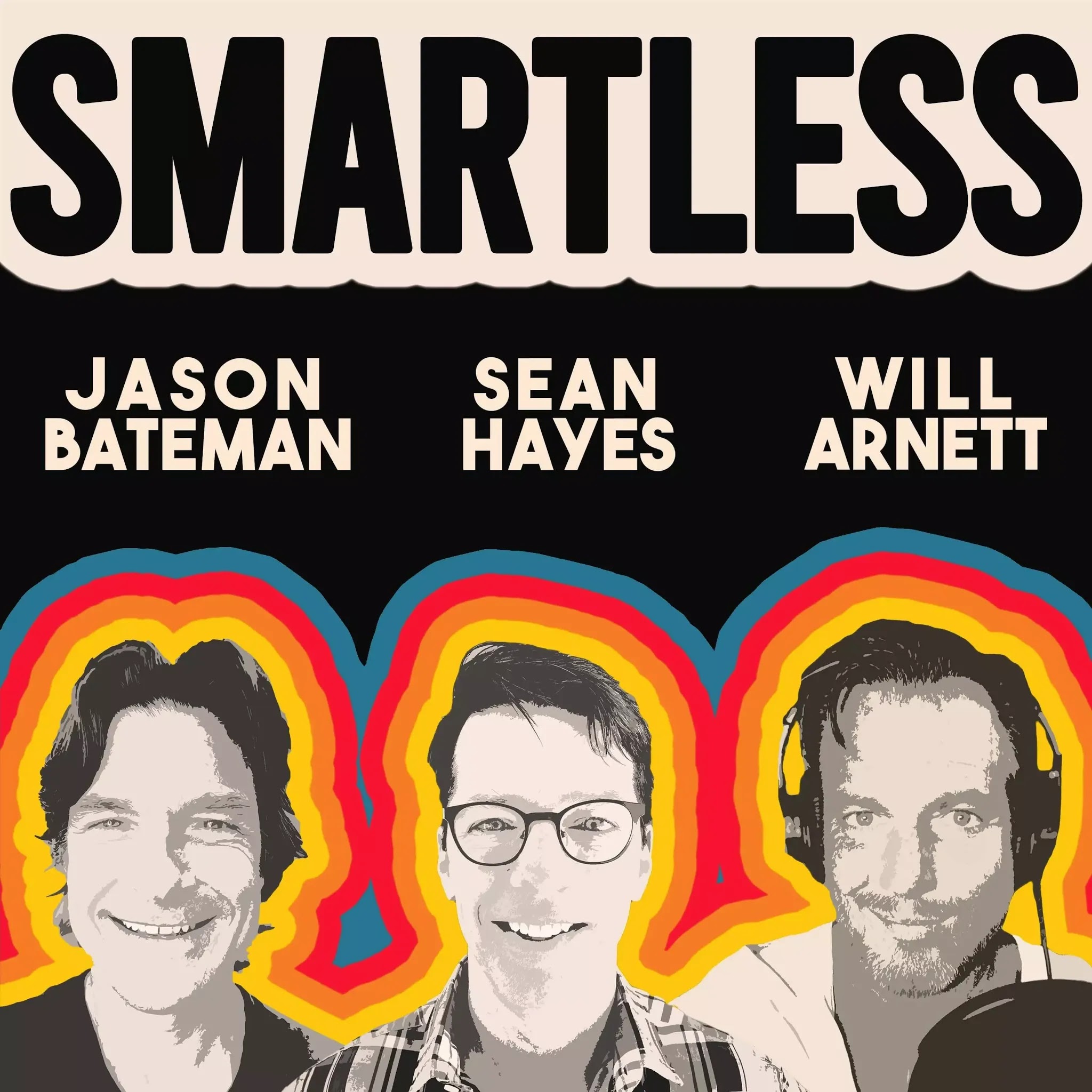
SmartLess


An amusing podcast with co-hosts Jason Bateman, Sean Hayes, and Will Arnett. I happened across this one accidentally, and I'm glad I did! Each episode one of them brings on a guest that's a surprise to the other two, and they come up with interview questions on the spot. Their guests include actors, comedians, and even a politician, so far.


I know I've watched other movies, but I can't for the life of me remember. What have you been watching or reading lately?


Wednesday, January 29, 2020

Sooo Many Recommendations!

One thing I've learned the last few years is that reading widely and actively seeking out diverse voices is a wonderful way to widen my horizons and find new authors to enjoy. Every little once in a while, I post on Facebook asking for recommendations, and people unfailingly come through with a wealth of suggestions.

Yesterday, I posted asking for recommendations of pulp, noir, and magical realism. I was going to use the post as a reference going forward, but realized that it would be nice to share the authors and books here so others could discover them, as well. Plus, this way I have a consistent place to come back to when I'm looking for which book to pick up next!

One thing that was mentioned when I talked about wanting to learn to write in these genres was to be careful of the cultural appropriation of taking on magical realism. That it has been used in South America in reaction to colonialism. I wanted to look more into that, but a rudimentary search showed it to be an even bigger and more complicated topic, and one that traces colonialism back further in time. It's a topic I definitely can't cover at the last minute. If you're curious, I encourage you to look into it.

Here's a list of the recommendations I received, so far:

The Corpse and the Girl From Miami - Jim Urbancik (N, P)
Jim Thompson (The Killer Inside Me was specifically mentioned) (N,P) x4
Chester Himes (N, P)
Raymond Chandler (N) x2
Comics (Detective, Martian Manhunter, The Question, Plasticman) (N)
Dennis Lehane (Mystic River, Gone Baby Gone, Shutter Island) (N-Neo-Noir)
Will Christopher Baer (NN)
Craig Clevenger (NN)
The Fighter - Craig Davidson (NN)
The Wind-Up Bird Chronicle - Haruki Murakami (MR) Murakami x2
Caitlin Kittredge - Dreaming Darkly (MR)
Kerri Manicalco's YA Historical series (MR)
Joe R. Lansdale (The Hap and Leonard books were specifically mentioned) (N, P)
Gabriel Garcia Marquez (One Hundred Years of Solitude was specifically mentioned) (MR) x4
David Goodis (N, P)
Charles Willeford (Someone specifically mentioned The Burnt Orange Heresy) (N) x2
Pulp According to David Goodis - Prof. Jay A. Gertzman (good if you want to analyze pulp)
Year One: Chronicles of the One (MR)
Don't Breathe a Word - Jennifer McMahon (MR)
Megan Abbott (Bury Me Deep, Dare Me, The Fever were recommended, specifically) (N-modern) x3
Night Circus - Erin Morgenstern (MR)
Jon Bassoff (N-modern)
Alan Guthrie (N-modern)
Les Edgerton (N-modern)
Heath Lowrance (N-modern)
Woman Warrior - Maxine Hong Kingston (MR)
Bruce Taylor (MR)
Franz Kafka (MR) x2
The Eye of the Heart (anthology) (MR)
Barbara Howes (MR)
Margin: Exploring Modern Magical Realism (Tamara Sellman)
Alice Hoffman (MR) x2
Borges (MR)
Cheever (MR)
Ross MacDonald (N)
James Ellroy (LA Confidential was specifically mentioned) (N) x2
The Name of the Game is Death - Dan Marlowe (N)
Black Wings Has My Angel - Elliot Chaze (N)
Cornell Woolrich - (N)
Nightmare Alley - William Lindsay Gresham (N)
James M. Cain (Mildred Pierce, Double Indemnity, The Postman Always Rings Twice x2) (N) x2
Shella - Andrew Vachss (N) x2
Mickey Spillane (N)
Ricky Ginsburg (MR)
The Son - Jo Nesbo (N)
The Old Drift - Namwali Serpell (MR)
Imagica - Clive Barker (?)
Juan Rulfo (MR)
Italo Calvino (MR)
Yasunari (MR)
Kawabata (MR)
Kemzaburo Oe (MR)
Banana Yoshimoto (MR) x2
The Friends of Eddie Coyle - George V. Higgins (N)
The Long and Faraway Gone - Lou Berney (N)
Fast One - Paul Cain (N)
Accelerate Learning Techniques for a Budding Sociopath - Evan Hundhausen (?)
Shoeless Joe (MR)
The Best American Noir of the Century
Otto Penzler (N)
The Black Lizard Big Book of Black Mask Stories (P)
Isabelle Allende (House of Spirits was specifically mentioned) (MR)
Clarice Lispector (MR)
Laura Esquivel (MR)
Toni Morrison (MR)
Ray Bradbury (MR) x2
Charles Beaumont (N)
William F. Nolan (N)
John Franklin Bardin (first three novels) (N)


Okay, wow, that was way longer than I thought it was. I'll be updating as the post continues to get responses, so they're all in one place. Since I didn't do this with any of the past lists, I'll post those in the future if they pop up as memories.

MEDIA CORNER

BOOKS


This week I finished The Elephant in the Room: One Fat Man's Quest to Get Smaller in a Growing America, by Tommy Tomlinson.


This is a candid examination of a man's struggle with his weight. He's a journalist, and the voice in this book makes it a pleasant read. He updates his weight over the course of a year, which is honest and helpful for others struggling with their weight. Ultimately, it's an inspirational story.

I also finished There's Someone Inside Your House, by Stephanie Perkins.


This was a YA, which I'd forgotten (I bought it probably two years ago, if not longer, on the recommendation of a friend who'd also recommended You.) I didn't really connect with the story until about halfway through, when the action and tension pick up. The first half felt boring and more focused on a burgeoning romance, but the second half brought the suspense. Which is funny, because we know who the killer is about halfway through the book. Everyone does. What we don't know is WHY they're killing kids in this small, rural town.

This was billed as unflinching, with some harsh deaths, but I felt that the deaths, though they were creative, were so quickly touched on, with no suspense drawn out, that I wasn't all that compelled by them. Again, not until about halfway through. Until I reached that halfway point, I wouldn't have recommended the book. But I read the last half over the course of two days, lugging the book around with me everywhere I went.

I actually liked the diverse cast of characters. I just didn't connect with them as early as I would have liked to, and I can't put my finger on why. When I think about it, they're not multi-dimensional right away. That came later. There were some cliches employed in terms of red herrings, characters, and implication of a large event in the character's life that ended up being disappointing in the scheme of things, etc. I wasn't sure who the killer was (and looking back, I don't think there are hints laid out about it, which means it wasn't effective), but I knew who it wasn't, and was irked at the finger pointing, because it felt too obvious. There was also head hopping. Though it never became confusing as to who was thinking what, it took me out of the book as a writer. Would it have bothered me if I wasn't? I have no idea. But it did.

CURRENTLY READING: The Devil in the White City, by Erik Larson.


MOVIES


If you have Shudder, there's a hysterical horror movie on there entitled Tammy and the Teenage T-Rex, (also billed as Tammy and the T-Rex), featuring young Denise Richards in her first starring role and young Paul Walker. This is pure, comedic ridiculousness. A teenage boy gets killed, and a mad scientist (the actor who played Bernie in Weekend at Bernie's) transplants his brain into an animatronic dinosaur, who then seeks out his girlfriend and the people responsible for his death. This is sci-fi horror. It reminded me of a non-scary Reanimator. It made me laugh and roll my eyes, but in the best way.


Also on Shudder, The Marshes was a creepy gore-fest. It's an Australian horror flick about three biologists who trek into the marshes to gather information, only to find a terrifying killer with supernatural powers. And rude, ignorant, hicks. It's funny to me to see that cliche appearing in movies created in other countries. This wasn't the best movie in the world, but it was tense and kept me interested.


Finally, my husband and I happened across a Chuck Norris movie I wasn't familiar with, called Silent Rage. It turned out to be a creepy, sci-fi thriller, which was unexpected. I grew up on Chuck Norris action flicks, and there's an element of that in this film, but I didn't remember anything like this. A trio of doctors perpetrate genetic experimentation on a man, who goes crazy and kills several people. The police shoot and kill him, but the doctors get him back and heal him. He goes on a silent killing spree, no longer able to speak, but making animalistic noises. The actor, Brian Libby, was excellent at being creepy. What he conveys through body movements, growls, and facial expressions is eerie and frightening. He was a large man who also happened to be oddly flexible. I enjoyed this both as a kickback to my childhood, watching Chuck Norris singlehandedly take out a bar full of bikers, and as a surprisingly freaky sci-fi thriller. Ron Silver, another old favorite, is also in the film.


TV SHOWS


For a feel good show, I've been watching AJ and the Queen. I'm enjoying seeing RuPaul in an acting role that feels true to him, yet stretches his acting ability. An aging drag queen ends up with a street smart, mouthy child tagging along on a trip around the south for a succession of drag shows. An ex-boyfriend of the drag queen has stolen his life savings, and now hunts him, because he turned the thief in to the police. There are several standout actors in this, but the one who has surprised me the most is Tia Carrere. I've never been a fan of hers, but her character is so out there and hysterical that I enjoy every moment she's onscreen. Available on Netflix.


For True Crime, I've been watching Nightmare Next Door about murders in small towns around America. It took me some time to get used to the narrator (maybe I expect them all to sound like the Forensic Files guy), but he got more serious, with fewer quips and lame one liners, after the first season. Available on Hulu.


PODCASTS


I don't think I've mentioned this yet. I've never been able to listen to podcasts, because I have trouble listening to someone speaking if I don't also have a visual, which makes podcasts and audio books something I don't typically imbibe in. However, I read a book put out by the two women who run this podcast, and decided to give it a try. Now I'm hooked. The way I've solved my lack of attention span is to take a bath most evenings and play Solitaire on my phone while listening to the podcast. It's called My Favorite Murder, and I listen to it free on Spotify. This is a comedy true crime podcast led by two women: Karen Kilgariff and Georgia Hardstark (sometimes jokingly referred to as KilHard or HardKil, which both work well for the subject matter.) Their fans are called murderinos, and consist of those of us who grew up fascinated by true crime (not awestruck by it, not fangirling over serial killers, but fascinated by the mentality behind it and seeking some explanation for the horrors perpetrated by these people) and freaking people out by wanting to talk about it. Their motto is "Stay sexy and don't get murdered."

No links today since this is a huge post already, but I'll see everyone on IWSG day!

Do you know much about the background of magical realism? Have any recommendations for these three genres? Read any of the recommended books or authors, and would you recommend them? Do you seek to read new and different genres outside what you're typically drawn to? Seen any of these shows or movies, or read the books? What about the podcast? Do you have a true crime podcast you'd recommend? What are you watching and reading this week?

May you find your Muse.


Friday, January 26, 2018

Horror List Book Review: Invasion

I'm reading through three lists of best horror with two friends (DeAnna Knippling and M.B. Partlow), posting reviews as we go. (For more information, including a list of the books, see this post.)

This week I'm reviewing Invasion, by Robin Cook.


This was Cook's first foray into science fiction; normally he writes medical thrillers. He writes an open letter about it in the introduction. It shows in the basic layout of the sci-fi/horror elements, but he brings something new to it all with his knowledge of medical topics, which led to some fascinating information throughout.

I was frustrated with how stilted the writing came across at times, especially in the almost complete lack of contractions. Even the character dialogue was done without contractions, which made it come across as wooden. It slowed my reading.

The pacing was a bit slow to start with, though the aliens take their first victim right off. The slower build up seemed legitimate for the most part, though, as the invasion at first seems like an odd flu virus at first, making it so authorities wouldn't listen when people got wise to the fact that those who recovered from the flu virus acted oddly afterward. This did a good job of isolating the characters and making them fight on their own.

Overall, it was an interesting book. The writing might have gotten to me more if he hadn't done a good job with the characters, the conflict, and the medical details. There were times the characters came across a bit cliched, but for the most part they were done well enough to make me root for them and stay interested in the story.

I'm not sure how I feel about the ending. It seems a bit simple, considering how long the book was. However, sometimes there's a satisfaction in the simplicity of a cure.

My Top Ten remain unchanged:

My Top Ten:

1. The Handmaid's Tale (Margaret Atwood)
2. The Girl Next Door (Jack Ketchum)
3. The Bottoms (Joe R. Lansdale)
4. Coraline (Neil Gaiman)
5. A Choir of Ill Children (Tom Piccirilli)
6. Needful Things (Stephen King)
7. 1Q84 (Haruki Murakami)
8. Those Who Hunt the Night (Barbara Hambly)
9. 20th Century Ghosts (Joe Hill)
10. Rebecca (Daphne DuMaurier)

My next book review will be of Ghoul, by Brian Keene.

Have you read anything by Robin Cook? Does he use contractions in his other books? If you've read both his medical thrillers and his science fiction, how would you compare the two?

May you find your Muse.

Friday, January 12, 2018

Horror List Book Review: John Dies at the End

I'm reading through three lists of best horror with two friends (DeAnna Knippling and M.B. Partlow), posting reviews as we go. (For more information, including a list of the books, see this post.)

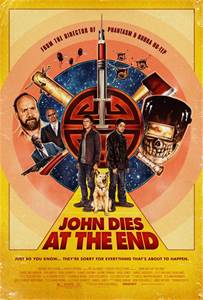
This week I'm reviewing John Dies at the End, by David Wong.


This is going to be another brief review, because I actually read the book months ago, forgetting it was on my list, and gave it away at a Halloween book exchange, so I can't even reference it. Whoops!

"John Dies at the End" is an oddball journey with Lovecraftian themes. There are some real creepy moments, but also a lot of humor. This was originally published online, if I'm remembering right, and the spelling and grammar shows it, but the voice of the author is enjoyable enough to ignore that (for the most part). David Wong is not only the author (a pen name), but the main character, and he's relating to you in first person what occurred when he and his friend John got dosed with soy sauce, a drug that does insane things to their brains. Suddenly, they're seeing things in a whole new way, things that others can't.

It's juvenile and raunchy at times, but still funny. It's crazy and random. I figure it's worth a read for the fact that it's different than other books out there, though you won't come away feeling like you've read great literature.

As I've changed my ratings to only keep a Top Ten, nothing has changed this week. My Top Ten are still:

My Top Ten:

1. The Handmaid's Tale (Margaret Atwood)
2. The Girl Next Door (Jack Ketchum)
3. The Bottoms (Joe R. Lansdale)
4. Coraline (Neil Gaiman)
5. A Choir of Ill Children (Tom Piccirilli)
6. Needful Things (Stephen King)
7. 1Q84 (Haruki Murakami)
8. Those Who Hunt the Night (Barbara Hambly)
9. 20th Century Ghosts (Joe Hill)
10. Rebecca (Daphne DuMaurier)

Not sure what I'm reading next, but I've got a stack, so yay!

Have you read this or seen the movie? What did you think? Will you be reading the sequels?

May you find your Muse.

Friday, February 12, 2016

Horror List Book Review: The Year's Best Dark Fantasy & Horror 2010

I'm reading through three lists of best horror with two friends (DeAnna Knippling andM.B. Partlow), posting reviews as we go. (For more information, including a list of the books, see this post.) To see the books I've reviewed so far, you can view the list at the end of this post where I rank them.

This week I'm reviewing The Year's Best Dark Fantasy & Horror 2010, edited by Paula Guran. 


First, I'm always going to enjoy an anthology of short horror unless it big time sucks. This didn't suck. Look at the names on there! One of those names wrote one of the top stories I've ranked so far in this challenge. These are heavy hitters in horror and dark fantasy.

There were a ton of stories in this collection. I was pleasantly surprised to see Boulder author Stephen Graham Jones in there. He's making these collections fairly consistently these days. It was actually a story I'd read before, likely in his own collection. 

Because there are so many stories, I'll touch on a few favorites.

Elizabeth Bear started the collection strong with The Horrid Glory of Its Wings. This one was well written and creepy, yet it had a lot of heart and a strong impact. A sick little girl meets a harpy. The reader is left to wonder if the harpy represented freedom or something darker.

I like a good revenge story - preferably one without insane amounts of torture and gore - and Suzy McKee Charnas delivers one with a fabulous ending in The Lowland Sea. The Red Sweat has come along, causing people to sicken and die, and spreading rapidly. A rich producer holes up in his mansion with a bunch of his employees, family, and lackeys. Told from a maid's POV, the ending delivers a sweet punch to folks who believe they're above everyone else, and are willing to tromp on those below them.

Michael Shea wowed me with language in Copping Squid. I wanted to quote half the contents of his story due to their beauty, yet the story was set in filth and squalor. The juxtaposition sang. "When he was a kid, he'd always felt sorcery in the midnight streets, in the mosaic of their lights, and he'd never lost the sense of unearthly shapes stirring beneath their web, stirring till they almost cohered, as the stars did for the ancients into constellations." p. 44. There were hints of Lovecraft, the story speaking of something deeper beneath the grimy underlayers of the city.

A Delicate Architecture, by Catherynne M. Valente, was my favorite story in this collection, by far. A twist on a well known fairy tale, but you don't know it until the end. And when that realization comes, it's amazing. This tale was delicate, lovely, and delicious, yet deeply sad. An origin story born of the ultimate back stabbing. 

Steve Duffy's Certain Death for a Known Person is a punch in the gut. A simple decision has a huge impact years later. It's easy to trade an unknown person's life for that of someone you know, but what happens when you discover you know them better than you thought you did? I read this one with growing dread until the moment my suspicions (really...certainties) were confirmed.

John Mantooth's The Water Tower was reminiscent of The Body/Stand By Me. Well written, heart felt, and with a subtle and sad shock at the end.

In The Porches of My Ears, by Norman Prentiss, felt like sleight of hand to me. Another gut punch. Most of the story is spent in a movie, with our POV character sitting with his wife behind a couple where the husband is blind, the wife telling the details of the movie via whispers they can clearly hear. She twists the ending to make it sad, though it was a happy ending. Prentiss then does the same thing to the reader, all in the last page or two. He gives readers a clue right at the beginning, then offers distraction up until the moment he dumps us on our heads.

The Other Box, by Gerard Houarner, hit me right in the Mom Place. The despair of a mother whose children are all stolen from her, one by one. Something magical behind it all. Her life crumbles around her, but her drive to get her babies back takes her to a dark, yet hopeful place. There's more hinted at, including a history with this particular magic, but we never know for sure.

Steve Rasnic Tem, someone frequently found in these collections, makes us look at one hand while the other produces the coin. The Cabinet Child is told like a fairy tale, but with a spin. First, we hear the wife's POV. She's sad and lonely, desperately wanting a child. The reader comes to resent the husband in staunch support of her. But then we see his POV, and are stunned by the other side. We end the story with a whole different knowledge than we began with. Another sad one.

Vic, by Maura McHugh, was another story utilizing dawning realization to tell the reader they already know this character. I can't say much without giving it away, but this story was well told and perfectly built up.

Michael Marshall Smith perfectly closed out the anthology with What Happens When You Wake Up in the Middle of the Night. Told from a child's POV (quite perfectly), the child asks his mom why she turns his light out after he falls asleep. He manages to convince her to leave it on, as long as he doesn't wake his parents up in the middle of the night if he wakes up. Only he does wake up, and his light is off. Not only is it off, but it's missing. A cautionary tale against turning off your children's lights at night. I also got a kick from it, because my kids have asked me this very question. Simple, brief story telling.

Since I point out the best, I should probably mention a couple I struggled with. Stewart O'Nan's Monsters must have been dark fantasy, rather than horror, but if someone had drawn a picture of me reading it, there would have been a giant question mark over my head. It felt like something I'd read in Reader's Digest. I kept waiting for the dark punchline.

The Brink of Eternity, by Barbara Roden was a bit dull for me. There was an interesting aspect in that it switches between articles about an explorer, and the actuality of what happened with the explorer, which was not, of course, what the article said. Still, I struggled, and considered skipping this one. 

Strange Stories From an Unfinished Film, by Gary McMahon was a story with promise that ended up irking me due to missing details. I get that they were missing to lend mystery to the story, but they actually ruined it for me.

That was harder than I thought it was going to be. Out of 39 stories, I ended up writing about 14 of them, anyway. And I was tempted to write about more than that. There were so many quality stories in here, so many authors I respect. There were stories that flipped genres on their heads. Ones with deep emotional impact. Ones that stunned me. There were also enough stories to last me a couple weeks, which is why these collections are so worthwhile.

Paula Guran did a great job putting this together. Even the ones I listed that I struggled with for one reason or another weren't badly written. They were just not my kind of thing. There are others who would probably enjoy those and dislike some of my favorites. That's the beauty of an anthology like this - something for everyone.

My new rankings:

1. The Handmaid's Tale (Margaret Atwood)
2. The Bottoms (Joe R. Lansdale)
3. Coraline (Neil Gaiman)
4. A Choir of Ill Children (Tom Piccirilli)
5. The Year's Best Dark Fantasy & Horror 2010 (Paula Guran)
6. The Year’s Best Fantasy: First Annual Collection (Ellen Datlow and Terri Windling)
7. Those Who Hunt the Night (Barbara Hambly)
9. Dead in the Water (Nancy Holder)
10. The Damnation Game (Clive Barker)
11. The Wolf's Hour (Robert McCammon)
12. Berserk (Tim Lebbon)
13. Best New Horror, Volume 1 (edited by Stephen Jones and Ramsey Campbell)
14. The Tomb (F. Paul Wilson)
15. Blood Meridian (Cormac McCarthy)
16. The Imago Sequence (Laird Barron)
17. My Soul to Keep (Tananarive Due)
18. World War Z (Max Brooks)
19. From the Dust Returned (Ray Bradbury) 
20. In Silent Graves (Gary A. Braunbeck)
21. The Cipher (Kathe Koja)
22. Drawing Blood (Poppy Z. Brite)
23. The Doll Who Ate His Mother (Ramsey Campbell) 
24. Hotel Transylvania (Chelsea Quinn Yarbro)

I believe the next thing I'll be reading is Caitlin R. Kiernan's The Red Tree.

Heard of any of the authors I mentioned? Did you read this one? How do you feel about twisted fairy tales?

May you find your Muse.


Friday, August 21, 2015

Horror List Book Review: Year's Best Fantasy

I'm reading through three lists of best horror with two friends (DeAnna Knippling and M.B. Partlow), posting reviews as we go. (For more information, including a list of the books, see this post.) To see the books I've reviewed so far, you can view the list at the end of this post where I rank them. 

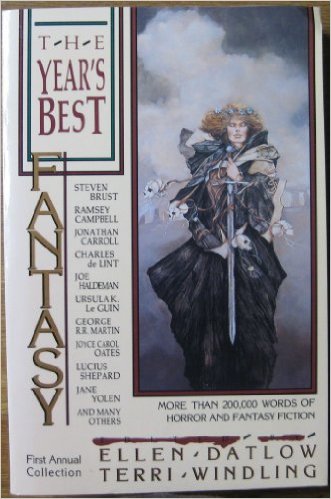
This week I'm reviewing The Year's Best Fantasy: First Annual Collection, edited by Ellen Datlow and Terri Windling. 


Edward Bryant wrote the introduction. Fun fact: I met him and Steven Brust (who has a story in this collection) at my first Mile Hi Con. I had no idea who they were at the time. Whoops!

I found the introduction fascinating, especially as a writer of horror. You'll notice this collection is called the year's best FANTASY, with no mention of horror. This was put out in 1988, featuring the best stories from 1987. Up until 1987, horror was published and honored as fantasy. Horror Writers of America had just been started, with Dean R. Koontz and his wife being instrumental, due to a call for it from both horror and fantasy authors. Horror was taking up a lot of space, both in terms of publishing space and awards being given out at the World Fantasy Convention. When this collection was put together, they were still being lumped together, and how the split would go was up in the air.

As with all these collections, I enjoy going through the intro for the little twinges of memory I get from reading what books, TV shows, movies, etc. came out that year. And to read all the horror news of the time. This one may have been the most educational for me, because of the above!

Instead of splitting each story out separately as I've done in the past, I figured I'd mention my favorite stories instead. 

My top two were:

Halley's Passing, by Michael McDowell. It's about a serial killer (who, as it turns out, is also something more). He travels around and has a quota of one death before dawn of each day. The way the story was laid out was so perfect. We're in the character's head, and he's so business-like about what he does, keeping a notebook record of his expenses, murders, and income from each murder. It's the sheer lack of emotion about each kill, laid out in clear detail, that got me. Each kill had to be different, because he was obsessed with avoiding patterns. The most horrifying details were often throwaways, such as when he's talking about keeping a record of addresses, "because sometimes he likes to visit widows." Just another day for him. I loved the deliberate movement of the character through the story. And the way he came across his victims, in places you feel safe, daily situations, etc. It gave such a cold, hard look at daily life, and gave life to the meme going around Facebook about how many times you walk by a murderer in a day.

The Pear-Shaped Man, by George R.R. Martin. First of all, I've never read anything of his, and I had no idea he was originally known for horror. As of 1987, he was considered a horror author. He was also working on the television show Beauty and the Beast. This story hit perfectly on certain experiences women have with men. A woman moves into an apartment building and frequently sees a neighbor watching her. He's uber-geeky (I pictured one of Martin Short's characters when he was described, especially when it came to the brown polyester pants pulled up to his armpits), socially clueless, has pasty skin, etc. It was the details in this story that got me, though. I noticed it had me physically pulling into myself, squinching up, shoulders rising, during certain parts. There's no gore or violence, but the geeky neighbor is gross in a million little ways. Stuff like a perpetually wet lower lip, squishy white fingers like maggots, and the fact that he keeps cheese doodles in his pockets and offers them to her. The main female character is trying to figure out what's up with this guy, and he messes with her in ways no one believes. Her roommate's boyfriend decides she's obsessed with the neighbor and tells her she's imagining things, but those tiny details are there. Windows oddly kept open, cheese doodles in weird places, things moved. Add to that, the ending isn't what you might think from reading this description. It really hit all the right places for me as a woman who has had unwanted attention and tried to be nice about it.

I listed these two separately because they're the stories I'm still thinking about, the ones I discussed with friends after reading them. However, there were plenty of good stories in the collection. 

Honorable mentions (my other favorites):

A World Without Toys, by T.M. Wright. The fantasy element and commentary on adulthood were such fun, and the setup was immediately an eye catcher.

The Other Side, by Ramsey Campbell. A great piece of psychological horror. And it involved a creepy clown! Yay! I have a thing about people being made to doubt their own sanity, and this story was all over that.

Fat Face, by Michael Shea. Though everything seemed harmless, there was a sense of horror beneath the actual story. It used the senses well, and was beautifully written. Felt inspired by H.P. Lovecraft.

Uncle Dobbins Parrot Fair, by Charles de Lint. This story was magical. One of the few purely fantasy stories that made it into my favorites. It was about magic in the modern world and belief in magic. It left me with a feeling of content and happiness, and put a smile on my face.

Haunted, by Joyce Carol Oates. This story was haunting and gripping, because she says fairly early on what's going to happen, yet you read on to find out more, and with that little bit of hope that it won't happen. It flitted around, jumping from time to time, which was effective in keeping the reader guessing and in making the details disjointed.

Splatter: A Cautionary Tale, by Douglas E. Winter. This was told in an unusual way, with a horror writer trying to find success during a time that appeared to be the castration of horror writers. Alongside his story are snippets about a battle to keep horror from becoming violent pornography, with a call for women to have better treatment in horror. It was told in flashes that tied it together with actual horror movies/stories of the time. Cleverly done.

Gentlemen, by John Skipp and Craig Spector. This one felt deeply symbolic of men who are abusive. But it was literal in this, in the sense that a good man is taken over by something that burbles out of the toilet in a dive bar. He can see what he's doing, but has no control. Until years later, when he finds he can move one arm while the thing inside him sleeps. Disturbing.

And one that really affected me, though I'm not sure it was a favorite necessarily, was DX, by Joe Haldeman. The author was a Vietnam vet in real life, and this is a poem about war time. It was a gut punch, and left me with moist eyes at the end. Incredibly powerful. And sad.

There were a lot of good stories in this one, with a few that made me scratch my head. All the ones that left me feeling like the story was pointless were fantasy, so perhaps it spoke more to my understanding of the genre than the stories themselves. The final story in the collection, A Hypothetical Lizard, by Alan Moore, was one I almost didn't bother finishing. I stuck it out, and was happy to have done so, but I felt like it could have been significantly cut and been a stronger story. 

My Name is Dolly, by William F. Nolan was good, and might have been among my favorites except for the ending. Somehow the ending took away the wonder for me, and caused the rest of the story to fall flat. 

Voices in the Wind, by Elizabeth S. Helfman was sweet, and spoke about believing in magic and wonder. It was very short and simple, and nothing much happened, so it fell flat for me, as well.

Small Heirlooms, by M. John Harrison was one I read twice to try to get the point of. Even after two reads, it was one of the head scratchers. I completely missed the point. The other head scratcher was The Fable of the Farmer and Fox, by John Brunner. I just purely didn't get it. Well, I thought I got the gist of it, but it was maybe too deep a thinker for the mood I was in, and I chose to move on instead of trying to understand it better.

Author's Notes, by Edward Bryant, had such possibilities, but I felt like it wasn't played out as well as I would have liked. The idea was a kick, but I wanted more from it than I got.

Overall, great collection of stories, and a lot of fun to read the introduction. There are several authors I'd like to read more from, and there were no stories I absolutely hated. There were certainly no authors I'd avoid after this collection.

My new rankings:

1. The Handmaid's Tale (Margaret Atwood)
2. The Bottoms (Joe R. Lansdale)
3. Coraline (Neil Gaiman)
4. The Year’s Best Fantasy: First Annual Collection (Ellen Datlow and Terri Windling)
5. Those Who Hunt the Night (Barbara Hambly)
6. The Damnation Game (Clive Barker)
7. The Wolf's Hour (Robert McCammon)
8. Berserk (Tim Lebbon)
9. Best New Horror, Volume 1 (edited by Stephen Jones and Ramsey Campbell)
10. Blood Meridian (Cormac McCarthy)
11. The Imago Sequence (Laird Barron)
12. From the Dust Returned (Ray Bradbury)
13. In Silent Graves (Gary A. Braunbeck)
14. The Tomb (F. Paul Wilson)
15. The Cipher (Kathe Koja)
16. Drawing Blood (Poppy Z. Brite)
17. The Doll Who Ate His Mother (Ramsey Campbell
18. Hotel Transylvania (Chelsea Quinn Yarbro)

The next book I read will be Darkness, by Ellen Datlow. I believe it's another collection, and I've already got the notebook I've become accustomed to carrying around to jot down notes since I don't have a good enough memory to remember each individual story in a collection otherwise. Might as well keep using that notebook!

Have you read any of these authors? Which are your favorites? Did you know George R.R. Martin was a horror author originally? Did you know horror fiction had split out so recently (in the scheme of things)?

May you find your Muse.


Friday, July 3, 2015

Horror List Book Review: The Tomb

I'm reading through three lists of best horror with two friends (DeAnna Knippling and M.B. Partlow), posting reviews as we go. (For more information, including a list of the books, see this post.) To see the books I've reviewed so far, you can view the list at the end of this post where I rank them. 

This week I'm reviewing The Tomb, by F. Paul Wilson.


This book is actually classified as supernatural thriller, not horror, and I'd agree with that. There was nothing frightening about this story. However, the pacing was pretty good, the stakes high, especially at the end. I didn't always feel that tension, though, maybe because we knew who the villain was. Also, the main character wasn't too intent on finding the villain at first, so why would the reader feel that urgency? It wasn't until it became personal for him that things picked up.

The main character is Repairman Jack. He "takes care" of problems. He's charged with two jobs at the beginning of the book: 1. Find a missing elderly woman, and 2. Find the missing necklace of a different elderly woman who is dying in the hospital after being attacked and robbed.

His job ultimately leads him to a nightmare creature called a rakosh, an Indian (India) demon. The rakoshi are being used to take revenge, and he must race against time to stop them from killing someone he cares about.

I liked the character of Repairman Jack. He was down to earth, despite being a tough guy who discreetly takes care of problems he's paid to deal with. There was a certain aloofness, but he wasn't an uncaring man. Certainly, he has an interesting life. This is a series, so his adventures go on.

His good friend is Abe, a sports shop owner who also runs guns from the basement. Abe was a Jewish conspiracy theorist, and quite fun. 

His villain was a mixed bag for me. While he did have good and bad aspects, an important element of a good villain, he was a little too crazy-pants for me. At least there was a reason he was seeking his revenge. Even so, his rationale was thin. No matter what misgivings he had, he had to fix his karma by doing this awful thing, which makes no sense to me, but obviously I'm not a karma expert. He acknowledged to himself that these people were innocents, yet he had to take them out to satisfy his thirst for revenge that didn't even start until recently.

The characters that really irked me were the women. See, Repairman Jack has two love interests in this book. One is a woman he had a relationship with, but who broke up with him when she discovered he wasn't actually a repairman. She was a shrew. I hated everything about her. I couldn't stand any scene with her in it. She didn't give this man she was in love with a chance to explain anything to her, she judged him and harped on her feelings about his life every single bloody time we saw her, she blamed him for all kinds of things, and she sent mixed signals (because comfort--blah.) I feel like he was trying to write her as a "strong" woman, but what she was instead was a nasty, angry person. Blech.

The other love interest wasn't much better. She was a guardian of the rakoshi, and incredibly old, despite her appearances. At first, I liked her. She was strong, she was sultry, and she knew what she wanted. But she dissolved entirely, and turned out to be yet another damsel in distress for Jack to take care of, even against the creatures she had been put in charge of. What? She's 200 years old, but she goes into shock when he needs her most, whimpers and spaces out, lets the villain walk over her. Blech again. I wanted to slap her. She was useless. Why?

Every female in this book was a damsel in distress. Every single one. Trying to write them as strong doesn't cover that up. And my version of strong is obviously different than his, which is fine. To each their own. But I was so distracted by these women's weaknesses that I couldn't get fully engaged in any scene involving them. I found their weakness tiresome. I rolled my eyes every time they got in trouble or made a stupid mistake. I felt letdown whenever a chapter was about one of them.

On top of that, his relation to Gia, the woman he loves, but who broke up with him, irritated me to no end. They'd been apart for months, and she never tried to hide how disgusted she was by him. Yet he kept pushing, kept bugging her, kept calling, kept talking to her like nothing was wrong. And he was repeatedly hurt by her rebuffs. In short, I wanted to slap him. Stop being hurt by it. Leave her alone. I'm sorry you're hurt, but you're making it worse by constantly pursuing someone who doesn't want to be with you. Grow a pair and walk away, dude.

UGH!

In other words, the story is interesting, and the rakoshi mythology was well enough created that I actually looked them up to see if they were a real legend in India (nope.) The relationships and female characterizations were the weak points of this book. The story line was the strong point. I was rooting for him in everything but love (seriously, ugh). I think the tension could have been better.

This is an early book in the series, I believe, so it probably got better. One of the things about this list is that often the first book is put up as the author's best of, and that's rarely the case. Despite my not at all concealed rage at the female characters and "romance," I would read another Repairman Jack novel. I'd just skim to make sure Gia wasn't in it first. If the women in that book were as weak and useless, I'd stop there.

I'm having a harder time ranking books as I go now that the numbers are growing, but here's my best shot at it.

My new rankings:

1. The Handmaid's Tale (Margaret Atwood)
2. The Bottoms (Joe R. Lansdale)
3. Coraline (Neil Gaiman)
4. Those Who Hunt the Night (Barbara Hambly)
5. The Wolf's Hour (Robert McCammon)
6. Berserk (Tim Lebbon)
7. Best New Horror, Volume 1 (edited by Stephen Jones and Ramsey Campbell)
8. Blood Meridian (Cormac McCarthy)
9. The Imago Sequence (Laird Barron)
10. From the Dust Returned (Ray Bradbury)
11. In Silent Graves (Gary A. Braunbeck)
12. The Tomb (F. Paul Wilson)
13. The Cipher (Kathe Koja)
14. Drawing Blood (Poppy Z. Brite)
15. The Doll Who Ate His Mother (Ramsey Campbell
16. Hotel Transylvania (Chelsea Quinn Yarbro)

Now that I've officially depleted my closest library's reserves of books from the list, I'm unsure what book will be next. I need to switch back to the ebooks and see what I can come up with.

Have you read F. Paul Wilson? How about his Repairman Jack books? Do they get better? What did you think of the character of Jack? How do you define a strong woman character?

May you find your Muse.