Showing posts with label Pikes Peak Writers. Show all posts

Wednesday, October 5, 2022

IWSG - Horror Commentary & Recent/Upcoming Appearances

It's time for the October Insecure Writer's Support Group!


Created by Alex J. Cavanaugh, the IWSG exists for writers to get and give support about their insecurities and struggles in the writing world. Anyone can join. Simply click on Alex's name and put your blog on the linky list.

The co-hosts this month are: Tonja Drecker, Victoria Marie Lees, Mary Aalgaard, and Sandra Cox.

This month's optional question is: What do you consider the best characteristics of your favorite genre?

Something people often don't realize is how horror addresses societal ills and issues. It's one of the first genres to cover current events, even though it's often doing so through a modified lens. It can be political, social commentary, or an attempt at healing, but it aims to thrill and entertain at the same time.

Keeping it brief today, but I do have a couple podcast appearances I don't think I've posted about today, and I've got some upcoming in-person appearances.

Living the Dream podcast

I was on the Living the Dream podcast in August (scrolled back, but didn't see that I'd shared it), where we talked about the business of writing, goals, and how to achieve them.

You can listen on Spotify and Apple.

Paranormal: The New Normal podcast

I was also interviewed on Paranormal: The New Normal, where we talked about ghosts, cryptids, and X-Files. The episode isn't live as a podcast yet, but you can watch the video of the interview on the Facebook page.

Neither of these are book/writer podcasts, so it was fun to do something new. I also recorded with Bookshelf Odyssey, which is scheduled to come out the week of Halloween, so I'll link to that when it comes out. This one is a writing podcast!

In addition, I'll be in-person at the following events for those who live in Colorado:

HWA: Scary Stories & a Movie

I'll be doing a short reading and selling books at Scary Stories & a Movie. Afterward, there's a viewing of Trick r' Treat. All of this is at The Lyric in Fort Collins October 6, starting at 6:30 PM. The film is $10, and there will be concessions.

PPW: Best of Both Worlds: Writing Horror Comedy

I'll be presenting a half-day (four-hour) workshop on writing comedy, horror, and horror comedy via Pikes Peak Writers on October 15, noon to 4 PM at Ruth Holley Library in the meeting room. Best of Both Worlds: Writing Horror Comedy. Cost is $10 in advance, $20 at the door.


Finally, I'll be at MileHiCon the weekend of October 21 to 23. I've got four panels: Avoiding Cultural Appropriation in Art, Monsters Tell the Truth, Creating Content for Social Media When You're the Product, and True Crime Stories: What is the Appeal? It's a nice mix, and I'm looking forward to it!

I'm curious of my fellow bloggers will be at the 20 Books to 50k conference in Las Vegas next month? Let me know, and maybe we can meet up!

Okay, time for my submission roundup. I do this each month to keep myself accountable.

In September my stats were:

13 submissions

1 acceptance (My story "A Few of His Favorites" will be in the next issue of Indecent Magazine)

10 rejections

19 stories still out on submission

1 invitation to submit to an anthology

What are your insecurities? How are you feeling about writing this month? Are you submitting? Going to MileHiCon or 20 Books to 50k?

May you find your Muse.

Wednesday, December 15, 2021

C. Lee McKenzie Release - Shattered & Horror List Book Review - 1984

Well, hello!

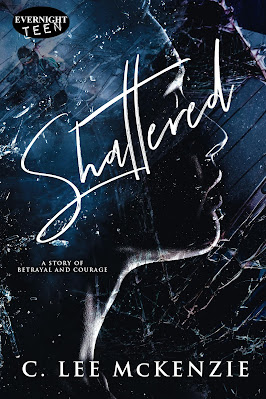
First, I wanted to shout out C. Lee McKenzie's newest release from Evernight Teen: Shattered. Having read about her research for this book and important issues that were addressed, I'm intrigued and can't wait to read it!


Libby Brown is a topnotch down-hill skier, who is only a day away from qualifying for the winter Olympics and her shot at the gold, but someone's out to make sure she doesn't make the team. Two questions thread throughout. Who's responsible for Libby's "accident"? And will Libby's life be shattered forever?

 Amazon

B&N

Kobo

Smashwords


I wanted to update an event that I'd put out incorrect information for. The Pikes Peak Writers Write Brain "A Horror Panel to Die For" is not free. It will cost $20 to attend it online. Write Brains are usually free, so I'd mistakenly assumed this one would be, too, and had shared that information out, so that's my mistake. My fellow panelists will be Carina Bissett, Sumiko Saulson, and Clay McCleod Chapman. The event is January 18, 6:15 to 8:15 PM, online.


For more information and to register, you can go to the event at the Pikes Peak Writers website or the Facebook Event page for A Horror Panel to Die For. There will be a gift card to Barnes & Noble given out to an attendee, and I'm working on a giveaway of my own, as well, to be announced at the event.


I'm looking for help in getting the word out about the release of my craft book The Business of Short Stories. This will not occur until January, but my last couple releases have been rushed, and I'm trying to do things better this time! You can sign up to help by clicking here to go to my Google Forms sign-up link. Thank you! I'm so excited about this book!


Okay, I think it's been since September that I did a horror book review. Holy cow! I meant to be doing one per month, but new books call to me and I heed those calls. What can I say?

I'm reading through three lists of best horror with two friends (DeAnna Knippling andM.B. Partlow), posting reviews as we go. (For more information, including a list of the books, see this post.)

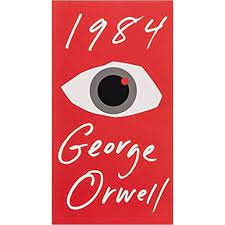
This week I'm reviewing 1984, by George Orwell.


This one was a brain thumper, for sure. It took me a while to get through it, not because the writing was bad (it absolutely wasn't), but I often found myself floundering to feel like there was a point. That's probably not quite what I mean to say. I got the point. I got where it was going. But it took so long to get there that I got frustrated and felt like I was flopping around waiting for something interesting to happen. Then when it finally did, it went pretty quickly. The point, of course, was to show us what the MC's world was like so we could get a feel for the totalitarian state, and then very slowly show how he started questioning and thinking and investigating and doubting.

Now, George Orwell has a lovely, literary voice, and he had good descriptions. I felt like he'd gotten so excited and into his concept that he thought we'd all want to be in there with him. For example, there's a chunk that is actually you, the reader, reading a secondary manual in the form of a book within this book. 

Also, I'm not really sure how I felt about the characters. Especially Winston, the MC. I'm not sure I really liked him, so it was curiosity that led me forward, not so much caring for the character.

Here's the thing. I think Orwell was brilliant, and that he took in a lot of the things happening in his time (the late 40s, I believe) and actually foresaw things in the future with great clarity. There are specific things he mentions that did come to pass in a way, such as using the body against itself with lie detector tests. 

I don't think that reading this book when I was younger and didn't really care about politics would have given it the same impact it had on me reading it now. So I would recommend if you read it as a teen in school that it might be worth it to read again and measure your responses and how different it feels to you now. I think that would be a fascinating experiment, and I'm a little sad I can't do that. 

I think that people of all political stripes could read this and be absolutely horrified at the state in the book, but also how visionary Orwell was. I realize that many will read it and aim that against their opposing party, but I really feel that it's reflective of ALL parties and government in the U.S., though obviously to an extreme level. And, of course, in other countries, as well. Orwell wasn't American. This book wasn't about America. Not intentionally. It feels a bit like a warning that was ignored. Is it satire? Dystopia? Can an apocalypse be political? Are all forms of politics fated to become satires of themselves and exactly what their creators were trying to avoid?

I can definitely understand why this book made it on the top 100 horror books list by Nightmare Magazine. I'm trying not to get political, but I'm honestly not sure how to review this book without doing so. It is, in point-of-fact, political. 

In an interesting aside, I scrolled through the reviews on Amazon for this book after reading it to see what others were saying. Partly because I was having trouble deciding if I *liked* the book and I was also just trying to process it, which took some time. It's a lot. Anyway, the reviews completely confirmed for me that people in various countries felt the book applied to their government/country AND that U.S. reviewers were totally aiming it at the opposing party and the government (so recent reviews were basically either calling out the Biden administration or the Trump administration, and I'm willing to bet money that going backwards would yield the same results for previous administrations). I'm not really sure if I find that hilarious or disconcerting. Both, I'd say. To me, it's applicable to all politics in the U.S. these days. Isn't total buy-in to the totalitarian state exactly what the government wants in the book? Do as I say, not as I do.

War is Peace

Freedom is Slavery

Ignorance is Strength

This is repeated throughout the book. Disturbing.

I feel like I could write a book about this book and still not feel like I processed everything as completely as I'm trying to. Fascinating book. Just maybe have a second one on hand to take breaks until it gets to the good part. Also, if you can get the one with an afterword by Erich Fromm, that's worth a read.

Have you ever read 1984? Did you do so as a teen, as an adult, or both? Did it hit you differently at different ages? Have you picked up your copy of Shattered yet? Did you sign up to help with my book release?

May you find your Muse.

Wednesday, October 6, 2021

IWSG-October Thrills

 It's the first Wednesday in October, so it's time again for the Insecure Writer's Support Group.


Created by Alex J. Cavanaugh, this group serves to seek and provide reassurance for our insecurities. Anyone can join. Simply click on Alex's name and put your blog on the sign-up list.

This month's co-hosts are: Jemima Pett, J Lenni Dorner, Cathrina Constantine, Ronel Janse van Vuuren, and Mary Aalgaard!

This week's optional question is: In your writing, where do you draw the line, with either topics or language?

I don't have many hard and fast lines. In writing horror, there are lines I'll cross that others might not, but there are also places I don't want to tread, such as pedophilia. In terms of language, I won't say words I wouldn't say in real life, such as racist terms, and I don't aim to put in a bunch of profanity, but I do cuss in real life, so it will show up in my writing some. I tend to keep it mostly clean except for the lesser cuss words, though. Short version: I try not to set too many hard limits in advance. If I write something that makes me too uncomfortable or that won't sell, I'll remove it.

As far as insecurities, October tends to be my busy month for appearances (horror and all...), and this year is no different. But I've found that being home for a year without really going anywhere or seeing anyone undid all the progress I'd made with being around other people. It doesn't come naturally for me to be outgoing and be able to talk to people. I'm very introverted, though I enjoy presenting, which makes no sense. So my insecurities are about whether or not I can still pull off the appearances and make them look natural, rather than being stressed. I think I did well at my first appearance of the month this past weekend at MileHiCon, so that's good.

Speaking of which, I had three panels and one reading. The reading was in a genre I don't write (utopian), so I wrote a flash piece that was utopian, but still had a touch of horror (utopia gone wrong). I was nervous all weekend until I read it, but got positive feedback, so shew. The panels all went well. I was moderator on two of them, and we had some good conversations about overused tropes, short stories, and revisiting childhood favorites.

I've got two more online appearances this month, so if you're interested you can attend from anywhere. I'll be doing a reading (story TBD) online via Stories Live Wednesday, October 20, at 7:00 PM, along with several other people. This is FREE on YouTube! You can access the page on my appearances tab, and I'll post about it on my Facebook that day. It does stay online, so I'll add the video to my appearances tab once it airs, too. Also, I'm doing a horror panel Saturday, October 16, from 12:30 to 3:30 PM with some awesome horror writers, but this one is $20 and will be via Zoom. The link for this is also on my appearances tab, if you're interested. It's put on by Pikes Peak Writers.


Time for stats! I post my submission stats each month to keep on top of things. In September, my stats were:

10 submissions

10 rejections

Sent 2 queries on stories that had been out for a long time

Pulled 1 story after not hearing back on the query (the other one was a rejection)

Currently have 24 submissions out

Not a ton to report, but it feels good to be back in the groove. Work is progressing on my NF WIP and I finished one short story and one piece of flash fiction. I'd like to get a short story done each week on top of the non-fiction book work, but there's been a lot going on, so I'm not going to beat myself up.

How about you? Are you getting work done? Any submissions? How about acceptances? What are your insecurities?

May you find your Muse.


Wednesday, March 18, 2020

Insight Into Conference Cancellations

First, thank you to everyone who participated in the blog hop on Friday, the 13th, and everyone who stopped by, and has so far purchased a copy of Bruised Souls & Other Torments! I just got my author copy today, so I was quite nervous, but everything looked great!


I know a lot of you are facing event cancellations, including writing conferences. I volunteer with Pikes Peak Writers, and we had to make the unfortunate choice to cancel this year's Pikes Peak Writers Conference. As one of the people who runs our monthly writing events, I'm also in the middle of scrambling to cancel and postpone events, and to figure out how to run them online for the next month. (If you have suggestions for how to run events where people can talk to each other online, I'd appreciate them! We're looking at Zoom and Facebook Live for different types of events.)

I thought some people might be curious as to why this string of cancellations may put various businesses and non-profits out of business and/or into bankruptcy. We were EXTREMELY lucky in that the event venue for our conference is willing to work with us. Had they shrugged and stuck to the contract, we would have had to claim bankruptcy, and our 501(c)(3) would have been no more. We would not have been able to recover.

Conferences put out a lot of money ahead of the event. Luckily, some of the costs are last minute, so that's money that doesn't go out until just before the event (some the week of) or after the event.

Advance Expenses (this isn't an exhaustive list--it's just to give an idea):
Airfare for faculty (this is a big one)
Registration/software/credit card fees (every transaction costs a certain amount in fees)
Percentage of the upcoming costs due to the hotel/venue in advance (massive chunk)
Bags/badge holders/printing/notebooks/pens/other giveaway shwag
Staff awards
Faculty shwag


Expenses Week of and Week After (again, not exhaustive):
Program printing/sign printing/other printing/printing supplies
Green room supplies
Faculty checks
Decorations for venue/ballroom
Final payment to hotel (includes hotel rooms for staff/faculty, food and beverage)(by far the largest chunk of money goes to this)
Books ordered for onsite bookstore
Consignment fees out to authors

I can't speak for other conferences, but for ours, money brought in for conference fees must cover the conference expenses, overhead for the annual costs of running a non-profit, expenses for monthly programming, etc. So having to refund conference fees to everyone means no money brought in to cover the annual expenses of the organization, on top of conference expenses already paid out and non-refundable. Plane tickets can be used within the next year, but unfortunately, the next conference is more than a year out, so we can't reuse those tickets. Anything paid out ahead of time is a loss.

I also work for a small business, a restaurant. At this time, our governor has shut down bars, restaurants, theaters, and similar businesses, except for takeout, drive-thru, or curbside. Each small business that cannot operate right now still has to pay their rent, utilities, etc. The big concern, of course, is the employees of these places. Most businesses appear to be adapting (as we have), and are providing takeout and curbside, which keeps their employees working and earning money. But bars can't do this, nor can many other types of businesses. If restaurants in your area are staying open, consider supporting local. Corporations have something to fall back on, and they will survive. Small businesses have nothing to keep them going.


We're living through interesting times right now. What it's shown is that humans (most, anyway) are quick to adapt and survive. I hope you're all doing well. If you've had an event canceled, please try to be kind to those responsible for running it. The decision to cancel an event is a hard one, and there are many factors people may not think about when it comes to following through. Bear in mind, also, that writers conferences and other types of conventions are often run by volunteers, so we're all doing this on top of day jobs and other life events, and we're doing so for free.

On a side note, if you have children home from school during this, you might want to ask them if they have friends who are in a bad situation at home and could use a break by coming to your house. Also, it helps if you can check if any of their friends need food or access (aka driving them) to places giving out lunches and breakfasts for those who are accustomed to getting them at school. Check with your elderly neighbors and immuno-compromised friends to see if you can do a grocery run or help with other errands. And if you have other ideas for how to help others, please feel free to leave your ideas in the comments.

Stay safe.

Has an event you were looking forward to been canceled? Has your town shut down yet? Do you know of an online format that might work to have meetings? Any ideas for how to help others during the quarantine?

May you find your Muse.


*Nosmoke Clip Art (dollar signs), clker.com, OCAL
*Hotel Icon Room Service Clip Art, clker.com, OCAL


Monday, May 16, 2016

Writer's Conference Basics, Part I - Overview

As I've mentioned, I attended Pikes Peak Writers Conference in April. I was also staff, faculty, and a volunteer, putting me in a semi-unique position to see a single conference from four different points of view. I also worked in a position that gave me access to the anonymous surveys filled out during and after the conference, which gave me yet more insight into the process, so I thought I'd pass along some tips in a multi-part series told from these different points of view.


Part I will focus on a general overview of conferences, and the people at them.

Conference or Convention?

First, I should define what a conference is. A conference tends to be a professional gathering, intended for writers, not fans (although we're all fans, too). There are workshops (where someone teaches on a specific topic), panels (where several people present and answer questions), and other types of programming and activities, though workshops are the primary focus. There may be pitches, critiques, open mic sessions, and more. You may or may not get food as part of your registration. Often, registration must be in advance, especially if food is involved. These can be anywhere from a day to a week, but are most frequently over a weekend. They usually cost more than conventions, but often involve some sort of food.

A convention is more geared toward fans in many cases, and has a more carefree feel, even if the programming is for writers. There will still be scheduled programming, usually more focused on panels than single instructor workshops, and they may have parallel programming that focuses on something fan related. They will also have sessions that are focused more on fun stuff, such as the tea dueling session at Anomaly Con. Chances are, there will also be people in costume. These usually cost less than formal conferences, but they don't feed you at all.


Attendee, Volunteer, Staff, or Faculty?

Now let's go over the difference between attendees, staff, volunteers, and faculty. Bear in mind that my familiarity is with a writer's conference run by a nonprofit, so not everything I say will be true for all different types of conferences or conventions.

Attendees are the people that have paid to attend (or won some sort of comped conference via a giveaway, auction, scholarship, or some other means.) They go to workshops, but do not have to work in any way. They are there to learn and to network.

Volunteers are attendees who have volunteered to help onsite, but do not take part in advance planning. They will be in positions that allow them to help for brief periods of time without missing much in the way of workshops and programming.

Staff consists of the volunteers running the conference. They hold a position title, though that title is likely not known to attendees or even faculty unless it's someone like the director. Their work starts anywhere from days to months (to years) before the actual event. These are the directors, the registrars, the planners, etc. There are staff members who do not have to do any work in advance, but miss a chunk of the conference due to their jobs. Some staff don't get to attend any workshops, because their jobs are that involved. Staff are not paid (again, at least at the conferences I'm familiar with, which are run by nonprofits.) They may receive a comp toward the conference (a comp is getting a percentage or amount off the price of the conference,) but this is by no means guaranteed.

There is also venue staff. Our conference is held at a Marriott hotel. Their staff are not conference staff, and our staff are not hotel staff. They're paid by the venue, and that's who they represent. They have nothing to do with the actual conference.

Faculty are the speakers running the workshops, sitting on the panels, etc. They're the teachers. They're also the editors, agents, experts, and illustrators. They can be brought in from outside the area, and may also be staff members. Some may be paid, some may not be, depending upon the conference and what or how much they're doing at conference. They are likely getting some sort of comp to conference, whether partial or full, and whether they're being paid or not.

Cost

The cost is all over the place. Conventions will be anywhere from $20 to a couple hundred. Conferences will usually be $100 to above $1000. The longer the conference, and the more food provided, the more expensive the conference.


Both may have optional extra costs. For instance, conventions may offer pictures and/or signed autographs from faculty at an additional charge, or t-shirts. They may have parallel programming with its own cost. Conferences may offer recordings of the workshops or an additional cost to pitch or get a critique. They may also offer extra programming, such as a specific separate track or an extra day of programming, at an additional cost.

You also need to take into account hotel, food, and travel costs. If the conference is local, this isn't an issue. Otherwise, these are necessary costs unless you have an alternate way of handling these, such as a friend who lives nearby. Often, a conference or convention will have a special discounted hotel rate if you let them know you're attending. This will be at a specific convention/conference hotel. Be sure to check the convention/conference website to find out if there are specific discounted hotels or meal plans.

Note: Book your hotel rooms in advance! If you are staying at an event hotel, the rooms may sell out fast. And if you plan on bringing your own food, ask to reserve a room with a refrigerator.

And, of course, books. There will always be books for sale. We all know this is a big cost for writers!


How Do They Work?

I don't want to make this post too long, so I'm going to go over this very basically, and will cover more in the attendee portion.

Registration - Find their website and they will have instructions on registering, (because they want you to attend). Conventions will usually have a fairly short registration form, while a conference will probably have a longer registration form. In addition to your general information, there may be questions about food choices, class choices, merchandise, pitch and critique choices, and more. You will be expected to pay when you register, not at the venue (although many cons have onsite registration available.) There may be payment plans for the more expensive ones. You should get an email confirming your registration.

Check-In - You will have to check in at a registration desk when you get to the event. These are usually clearly marked, but the front desk at the venue can direct you, if not. At that time, you will receive materials like a badge with your name on it, a schedule, meal tickets, appointment cards, and swag. You must have the badge to have access to the programming, so don't lose it! If food or appointments are involved, you will either find the information for that in your badge or in a registration packet (if you were given one.) My advice is to always take a moment to go through the materials you're given at the registration desk to be sure you got everything you should have, and so you can ask questions then and there. Read through the program. There is often important information in there.

Workshops/Panels/Programming - Now you choose what you want to go to! Look through the schedule. If there are workshop descriptions, look through those, too. A title might be misleading, so make sure you've read what the workshop or panel is really about. You'll likely have some session times where there are multiples you want to see, while other session times won't have anything of interest. It's the nature of the beast.

I'll have more information on this in the next post, but this should get you started. Please feel free to ask any general conference or convention questions in the comments, and I'll answer them the best I'm able.

Do you have any questions about conference or convention attendance? Have you attended a con? Have you worked at one? Taught at one? Have any advice of your own? Are there any terms in this post you need defined?

May you find your Muse.

Avatar Costume by Jesse, clker.com
Dollar: Nosmoke by OCAL, clker.com
Books by OCAL, clker.com


Monday, April 18, 2016

PPWC 2016 Wrap Up - All the Firsts

I'm back!

Pikes Peak Writers Conference 2016 is a wrap! I had several firsts (first time as PPWC faculty, first time being a participating author in a book signing), missed a couple opportunities (I was supposed to have a critique and present my query to an editor, both of which ended up not happening because I was working during the times I would have done them), and had an overall exhausting, but wonderful experience.

I had the opportunity to meet Jeff Lindsay, Joe R. Lansdale, Rachel Caine, Wendy Corsi Staub, Johnny Worthen, Steve Saffel, and a slew of fantastic creative folks.


I taught a workshop on short stories, and was on a panel with my fellow Ladies of Darkness, DeAnna Knippling, MB Partlow, and Susan Mitchell. Both had good attendance, and lots of questions and positive feedback, which felt phenomenal!


I also participated in the faculty book signing, where I signed copies of The Deep Dark Woods. I sold all but two of the books I'd consigned, which I'm really happy with.


The next week will still be busy, but not with the level of stress and pressure I had the last few weeks. I'm looking forward to getting back into my blog and jumping around to visit everyone I've missed in the last month!

How have things been for you for the last month? Anything exciting or interesting to share? How did your first book signing go? Every met any of the folks I mentioned above?

May you find your Muse.

Photo #1: With Jeff Lindsay, photo by Deb
Photo #2: Charise and I with Wendy Corsi Staub, photo from Charise's camera
Photo #3: Me presenting on short stories, photo by Becky
Photo #4: The horror panel, photo by Kameron
Photo #5: Me at the book signing with the last three copies remaining, photo by Michelle

Wednesday, April 29, 2015

PPWC 2015 Recap & Links

Pikes Peak Writers Conference 2015 was a success! Now that it's done, I'm working on recovering. Talk about a jam-packed week:

Tuesday we had a meeting, so this was our short work day (though, as treasurer, I went home and had a lot of prep work to do before disappearing for several days.)

Wednesday we did the major prep-work for conference (stuffing registration packets, picking up supplies, setting up the bookstore, etc.), with the day starting in the afternoon and us wrapping up at about 12:30 at night.

Thursday was the add-on day, with programming from 9 a.m. to 4 p.m. I attended a ghost hunt with Graves Paranormal as the PPW representative. It was fun seeing how the various instruments were used, and we had some interesting things occur, which weren't expected, as it's not a known haunted hotel.

Friday and Saturday were our full days of programming. I moderated a few sessions, read people's work in our Read & Critique 123 sessions, helped with ballroom, and did whatever else was needed. The book signing was Saturday. My minis got to come in, with my son excited to meet R.L. Stine. My daughter refused to go near him, no matter how nice he and his wife were, but she did get to meet a local author (DeAnna Knippling, who writes MG horror under the name DeKenyon) whose books she has been reading over and over, and who signed her quite worn copy of one of the books.

I had the opportunity to sit at the head table for all but one meal, meaning I got to chat with Mary Kay Andrews, Andrew Gross, and Seanan McGuire. I was seated with the winners of our Zebulon writing contest for one of the meals, which meant I didn't get to sit at R.L. Stine's table, but he was friendly and funny, as was his wife Jane, and I chatted with him at a staff/faculty mixer instead.


If you ever have the chance to meet him, I highly recommend it. Both he and his wife are friendly and funny. Both of them, plus Seanan McGuire and DeAnna Knippling, were great with my kids, which I appreciated, as there were a lot of people at the signing, so it was a bit overwhelming to my littles. DeAnna got down on the floor to talk to my daughter and sign her book. Seanan told her jokes and sweetly waved at my son (who is more bashful than my daughter). Jane Stine told people in the signing line that kids come first, and insisted she and Bob take the time to get a picture with my son and sign both books he picked up.

At the Saturday banquet, I was awarded Volunteer of the Year. Much to my relief, I'd thought we were hopping into the contest awards, which I was helping with, so had already done a face and tooth check (as in, "Is there any food on my face/in my teeth?") And I was feeling blissful from a heavenly chocolate cream pie I'd just eaten for dessert. Mmmm.


I moderated sessions I was interested in, so ended up attending a workshop on short stories presented by Rod Miller, a session on female serial killers presented by Pete Klismet, one on prologues by Laura DiSilverio, and one on rejection by Mike Befeler. I also attended one on other serial killers by Pete Klismet, but I wasn't moderating that one. I look forward to listening to all the ones I missed on the recording.

Sunday was a half day, with morning programming, then everyone heading home after lunch. For staffers, that meant clean up, closing up the bookstore, etc. I got home about 4:30 and promptly dozed on the sofa. That night, I slept 9 hours, which is amazing considering my sleep at conference consisted of 13 hours total from Wednesday night to Sunday morning. As you can imagine, I was exhausted. Given, no one sleeps well at conference. For me, I wouldn't have slept much better at home, but I'm betting I would have gotten a tad more. Happily, I had a roommate who worked hard to not disturb me in the mornings, and seemed to know not to engage me, even when I was awake when she got up. You don't talk to insomniacs in the middle of the night/early morning unless they talk to you first, people! It's an unwritten rule. Once I'm engaged in an interaction, especially verbal, all chances that I might fall asleep are gone, ffffft, out the window. A combination of a helpful roommate and spa and rain sound apps I downloaded onto my phone gained me a few hours of sleep from my first night (during which I got 1 hour of sleep). Yay!

Not only was the event a hit, but I had great fun with friends, got asked to dance spontaneously by someone in the bar line (who then went on to dance with a bunch of other random gals for the rest of the night in the bar), tried out a new restaurant one of the nights where food wasn't included in the conference (Thursday), and chatted with agents, editors, and writers galore.


As treasurer, much of my work began when conference ended, so I've spent the last couple days working on that. Note to self: arranging coins on the floor and using a dry erase board to track counting of cash is ineffective when you have a cat. I should have taken a picture of her managing to lay across both the piles of carefully arranged coins and the dry erase board. Sigh. Despite her help, I got the counting done, and she has continued to follow me around, getting into anything I'm doing, since I got home. I'm fairly certain she missed me more than my children did.

Ah, well.

(All posted photos taken by Jared Hagan, official PPWC photographer.)

With all that said, it's time for links!

Accepting Submissions:

Zero One Publishing is seeking short stories for their anthology, Whispers From the Abyss. Flash fiction and short stories up to 4500 words. They want stories in the spirit of H.P. Lovecraft's mythos. Pays a penny per word and contributor copies. Deadline May 30.

Arc Poetry Magazine wants spoken word poetry. Deadline May 15. Regular poetry submissions end May 31. Can submit up to 3 poems. Pays $40 per page, plus contributor copy.

One Story is looking for literary fiction short stories. 3000-8000 words. Pays $500 and contributor copies. Submission period closes May 31.

Glimmer Train has three free submission periods per year, with one of them in May. Short fiction, open genres. Pays $700, plus contributor copies. Reading period ends May 31.

SpeckLit is looking for drabble length fiction and non-fiction. Speculative fiction. 100 words. Pays $.05/word. Deadline May 31.

The Liz McMullen Show is looking for lesbian historical romance for Through the Hourglass. 3000-5000 words. Pays $30, plus contributor copies. Deadline May 31.

Crossed Genres seeks science fiction and fantasy with the theme of the year 2065. 1000-6000 words. Pays $.06/word. Deadline May 31.

Pole to Pole Publishing is accepting stories for their Hides the Dark Tower anthology. Science fiction, fantasy, and horror involving a tower. 500-5000 words. Pays $.02/word, plus contributor copies and possible royalties. Deadline May 31.

Christina Escamilla Publishing is looking for dark fiction for the anthology The Deep Dark Woods. Flash fiction up to 500 words, short fiction up to 8000 words. Pays $.05/word, plus contributor copy. Deadline May 31.

Pulp Modern is looking for genre fiction, including crime, horror, science fiction, and westerns. 2000-5000 words. Pays 1/4 cent per word. Deadline June 1.

Any of these of interest? Anything to share? Publishing news? Who is your favorite author to have met?

May you find your Muse.


Wednesday, April 22, 2015

I'm Off!

I'm packed and ready to go to the Pikes Peak Writers Conference! I wasn't going to post until conference was done, but I found out Tyrean  Martinson featured me, along with some fantastic writer/blogger folks whose names also begin with "S," over at her blog Everyday Writer, Tyrean Martinson. It's part of her A-to-Z Challenge, in which she features different writers and bloggers each day, leading up to a blogaversary celebration with giveaways.

So if you have a moment, go check out Tyrean's blog, and the wonderful folks featured today (and other days)!

And if you feel like it, I'd love to hear your best and worst conference or convention stories. It doesn't even have to be writer's conferences. Have you been to the worst dental convention ever? I still want to hear about it. You can keep me company with my insomnia at the hotel.

I'll be back to normal posting next week. Looking forward to visiting everyone. Have a great rest of the week and weekend!

Had any interesting experiences at a conference or convention? Good or bad? What happened?

May you find your Muse.


Wednesday, July 17, 2013

[Mostly] Wordless Wednesday - Elk Nuts & Links

I still haven't had a chance to go through the photos from my trip, so how about an infantile sampling?


Elk nuts? Actually, while we all know this means they sell elk AND nuts, hubby brought a gag gift back from Australia on one of his first business trips: a little bag made from kangaroo scrotum. So elk nuts really wouldn't be unrealistic. Also, this is the land of Rocky Mountain Oysters (look it up if you're not sure what that is).

The vast majority of my other photos are looking good, though! And they're scenic ones, not goofy ones like this one, with the exception of a few. I got some great photos of a gorgeous elk buck, along with a huge herd of elk up at the peak of one of the mountains. We also sat in a nasty thunderstorm, which apparently triggered a tornado down here over Pikes Peak. We missed it, but my dad got pictures. Insane once in a lifetime thing! (One hopes).

Okay, enough babbling. I'm a bit wired because I just got done with my first night at my CNA course. I could squirrel at you all day, but it's time for links. (Yes, I said squirrel. You know, like in Up: "Squirrel!" Highly distractible).

Free Online Workshop:

David Corbett presented a workshop for Pikes Peak Writers. You can view this 2 hour workshop absolutely free online, and it is most definitely worth the time! The workshop is The Outer Limits of Inner Life: Bringing Characters to Life by Looking Within.

Accepting Submissions:

Emby Press has several upcoming anthologies about monster hunters: Blood Trails is looking for your standard monster hunter as part of a trilogy of anthologies, with a deadline of August 15; Doomsday seeks monster hunters with a focus on an apocalyptic scenario, an outbreak, an epidemic, with a deadline of September 15; The Dark Monocle seeks steampunk monster hunters, with a deadline of October 15. All pay $25.

Alaska Quarterly Review seeks short fiction, fiction novel excerpts, poems, short plays, literary non-fiction, and photo essays. They do not open for submissions until August 15.

Descant is taking part in the 25 year anniversary of the fall of the Berlin Wall with an issue following the theme of Berlin. Pays $100 honorarium. Seeking fiction, poetry, essays, and art. Deadline August 16.

Horrified Press is accepting submissions for Until the End, an anthology featuring short and flash fiction based on a couple left behind in the apocalypse. Deadline August 20. Pays in royalties. May consider poetry. They're also seeking submissions for Tales of the Undead - Suffer Eternal, Volume III. Deadline August 25. Pays in royalties.

Chuffed Buff Books seeks poetry for Poetry and the City. Deadline August 31. Pays £4 per poem.

Wolf Willow Journal has four editions of their literary journal each year. They're thematic, but will accept things that don't follow the theme. Macabre Symphony will be their October 2013 edition. Poetry, fiction, non-fiction, artwork, and photography. Fall reading period ends August 31. Pays $20 for short fiction and creative non-fiction. Pays $10 for flash, photography, poetry, and art (cover art pays $20).

Grant:

Live in Brampton? The Brampton Arts Council offers a grant to writers of any kind, as long as their ultimate goal is publication. Amount varies. Deadline August 29.

Of Interest:

Rise 365 put out a piece by Claudia Good entitled 10 Things No One Told You About Being a Writer.

Interested in any of these? Anything to share?

May you find your Muse.


Monday, June 10, 2013

The Art of Character - Interview & Book Review With David Corbett & a Cover Reveal!

Happy Monday!

Today, I'd like to welcome David Corbett to my blog for an interview on The Art of Character, his non-fiction book on the craft of writing. You'll find a review of The Art of Character preceding the interview, and a special cover reveal after that!

My Review of The Art of Character:

Award-winning author of four (soon to be five!) thrillers, compared to Graham Greene and Ernest Hemingway, ex-private investigator, and seasoned speaker and instructor, David Corbett has now released a book on how to flesh out your characters, building them from the ground up to make them believable.


I should first say that I was sent a copy of this book to write an honest review. I'd been wanting to read more books on craft, and thought this would be a good way to jump in. Upon beginning to read it, though, I was drawn in. Yes, to a book on craft. Unlike some who write books on the craft of writing, David Corbett is already a respected writer of fiction, and this shows in The Art of Character. His writing flows, and what he has to say is interesting, not at all dry. I actually enjoyed reading it, and was so engrossed that I took pages of notes to reference back to later. 

"It is entirely possible that the act of writing serves as an incantation, beckoning the Muse, who in turn lures these evanescent beings we call our characters - which are in fact archetypes - out of the inner darkness over which she reigns. This can be both a consoling and terrifying view of the matter. But inspiration often alternates between consolation and terror." p. 7, The Art of Character.

There are four main parts, not counting the introduction and epilogue, organized in a logical and easy-to-follow order: Part I - Conceiving the Character, Part II - Developing the Character, Part III - Roles, Part IV - Technique. Throughout, Corbett provides useful examples, followed by helpful exercises. Some of the exercises force you into your own head, because...

"Every story worth telling in some way mirrors our lives, and to that extent explores four key questions:
     Who am I?
     Where do I come from?
     Where am I going?
     What does it mean?" p. xxiii (introduction), The Art of Character

But he doesn't only want you to look inside yourself for your characters; he also suggests you people watch, study strangers and the people you know. Learn what there is to know about your fellow humans. He approaches characterization from multiple facets, teaching us how to view our characters in a multi-dimensional sense, and helping us to avoid cardboard copies of other people's characters.

In my opinion, it takes great skill to write a book on craft that makes you feel like you're reading a piece of fiction. He doesn't bang your head with it, instead letting it soak in by approaching it in different ways, appealing to the different learning styles each person brings to the subject. I found myself nodding as I read, my eyes being opened to something I'd thought I understood, but hadn't fully grasped. I had to give up on the notes, instead underlining passages so I could come back to them (shhh, don't tell!). 

This is one book on craft I highly recommend. Think you know how to write great characters? It's still worth a read; I challenge you not to learn anything from it.

An Interview With David Corbett:

Q1: What made you switch gears to write this book after you'd published in fiction?

I taught an online course on character through the UCLA Extension Writers’ program, and that obliged me to write out ten lectures. I tend to be somewhat thorough (read: obsessive) in my lectures, so once I was finished, I thought: Be a damn shame and an awful waste not to use all this stuff. So I talked to my agent, who to be honest was not enthused. Another book on writing? Oh, the ho and the hum. But then she read what I’d provided and saw I had a unique take, both practical and philosophical, and the writing itself was superior to most how-to books. I was trying not merely to instruct but inspire. So we packaged the thing, sent it around, and Penguin agreed to publish it.

Q2: Do you feel character building has been under-represented in books on craft?

The trend in recent books on writing has been on structure, with character seen as a crucial element of that, but character is never the central focus. Robert McKee’s Story, John Truby’s The Anatomy of Story, and Christopher Vogler’s The Writer’s Journey—three of the most influential texts out there right now—all touch on character, but in the first two books it’s dealt with primarily in functional terms (how character serves the story), and Vogler’s approach sees character more in terms of archetypes than real people. All pronounce the importance of character but give little real guidance on how to conceive or develop great characters.

The guides I’ve read dealing specifically with character also felt strangely formulaic or uninspired to me. All had decent tips but I felt they missed the crucial element: That there is no way to create great characters without a comprehensive understanding of oneself and the elements of one’s own life that form the foundations of personality. Your material is yourself. Or, as Chekhov put it: “Everything I know about human nature I learned from me.” My book tries to teach how to be a perceptive and responsive student to one’s own human nature, the better to deliver that understanding to one’s characters.

Q3: While writing The Art of Character, did you run into problems unique to writing this sort of book versus fiction?

All creative work is essentially problem solving. That’s as true of fiction as non-fiction—or mathematics. I just needed to figure out what was necessary to deliver the best book on character I could write, and get it down. I teach, so it wasn’t that fundamentally different a process than I was used to.

Q4: What do you think is the best way to learn craft (i.e. books on craft, workshops, personal experience, etc.)?

Classes and textbooks provide you with an inventory of questions to ask as you’re writing: Where should I begin my story? Whose story is it? What creates the conflict? What are the stakes? How can I amplify the stakes and intensify the conflict? How can I sustain suspense and generate surprise? The best answers to those questions lie in the books you love, the books that have inspired you as a writer. Our best teachers are always the writers we admire and hope in some small way to emulate.

Q5: What do you think is the biggest mistake writers make in character building?

They rely on the story idea and don’t plumb the character as a unique being whose wants and yearning and fears and shame all drive the action—make it necessary, not just possible. The archetype approach hasn’t helped this problem. We’re seeing thinly disguised reiterations of cardboard heroes and mentors and such rather than real people whose lives generate the details of the story, not the other way around.

Q6: Was there a resource you found invaluable in honing your craft?

I consider the three books mentioned above invaluable, even if I also consider them limited with respect to character. Lajos Egri’s The Art of Dramatic Writing was also a crucial text for me, as were Stanislavski’s three seminal texts: Creating a Role, Building a Character, and The Actor Prepares. (I learned most of what I know about writing from studying acting and trial and error.) Oakley Hall’s The Art and Craft of Novel Writing was a very important and useful source, and Robert Olen Butler’s From Where You Dream also proved incredibly helpful.

But as I noted above, in the end I’m like everyone else, in that I learned most of what I know about writing from the writers I admire.

Q7: What piece of advice would you offer aspiring authors?

Writing is rewriting. (Eudora Welty) And you can’t revise what you haven’t written.

Q8: What's next for you in your writing?

My latest novel (my fifth), The Wrong Girl, is currently making the editorial rounds in New York. My third novel, Blood of Paradise, just sold in France, and I’m working on a film project with producer Shane Salerno.


David Corbett is the author of four novels: The Devil’s Redhead, Done for a Dime (a New York Times Notable Book), Blood of Paradise (nominated for numerous awards, including the Edgar), and Do They Know I’m Running? David’s short fiction and poetry have appeared in numerous journals and anthologies, including Mission and Tenth, The Smoking Poet, San Francisco Noir and Best American Mystery Stories (2009 and 2011). He has taught both online and in classroom settings through the UCLA Extension's Writers' Program, Book Passage, LitReactor, 826 Valencia, The Grotto in San Francisco, and at numerous writing conferences across the US. He lives in Vallejo, CA. For more information, visit www.davidcorbett.com.

I'm also excited to tell you that David will be presenting a workshop, free, online, via Pikes Peak Writers in July. It will be live on July 16, and we'll post it online within a week of that date. I'll be sure to post on here so you can access that workshop FREE!! It will be a video, not just audio.

THE OUTER LIMITS OF INNER LIFE: Bringing Characters to Life by Looking Within.


Join award-winning author David Corbett, Pikes Peak Writers, and Delve Writing, for this free, exclusively online Write Brain workshop on creating characters with depth. You will learn how to build an intuitive connection with your characters through an informed understanding of your own past, and how to use that bridge to create compelling backstories that bring your tale to life. David will discuss the crucial role of both helplessness and willfulness in exploring character, and how these seemingly contradictory inclinations are crucial in creating complex and engaging characters. He will also explore ways to heighten conflict in your story through a better understanding of the emotional stakes. By the end of the class, you'll walk away with a healthy start on your next bestselling novel and a deeper understanding of your characters and your story.


(Note: You can access this recording late the third week of July on the Pikes Peak Writers website. There's one available there now, completely free, from Page Lambert: Manifestation of Yearning: The Flesh & Blood Factor of Good Storytelling.)


AND NOW FOR SOMETHING COMPLETELY DIFFERENT! A Cover Reveal!


Zoe has a great pair of legs, perky boobs, and wears exactly what she needs to show it all off. She works hard for the easy sleazy ‘you only wish you were me’ reputation, burying who she really is—an all-out nerd. 

The only time Zoe gets to be herself is when she hides under her comforter to read X-Men comics, sending jealousy stabs at everyone who attends Comic-Con. Keeping up her popular rep is too important, and she’s so damn insecure to care about the consequences. But when Zoe’s sister takes her car for a ‘crash and burn into a tree’ joyride, her parents get her a replacement. A manual. Something she doesn’t know how to operate, but her next door neighbor Zak sure as heck does. 

Zak’s a geek to the core, shunned by everyone in school for playing Dungeons and Dragons at lunch and wearing “Use the Force” t-shirts. And Zoe’s got it bad for the boy. Only Zak doesn’t want Popular Zoe. He wants Geek Zoe. 

She has to shove her insecurities and the fear of dropping a few rungs on the social ladder aside to prove to Zak who she really is and who she wants to be… if she can figure it out herself.

The release date is expected in September 2013.

Cassie Mae is a nerd to the core from Utah, who likes to write about other nerds who find love. She’s the author of the Amazon Bestseller REASONS I FELL FOR THE FUNNY FAT FRIEND, and is the debut author for the Random House FLIRT line with her New Adult novels FRIDAY NIGHT ALIBI and PULLING THE SWITCH. She also has a three book deal with Swoon Romance Publishing, including her book HOW TO DATE A NERD. She spends her time with her angel children and perfect husband who fan her and feed her grapes while she clacks away on the keyboard. Then she wakes up from that dream world and manages to get a few words on the computer while the house explodes around her. When she’s not writing, she’s spending time with the youth in her community as a volleyball and basketball coach, or searching the house desperately for chocolate.

Monday, February 25, 2013

Method Acting? How About Method Writing?

In my new position as Director of Non-Conference Events for Pikes Peak Writers, I sailed my maiden voyage this Saturday in terms of putting on an event. All of the feedback I've gotten so far has been positive, so I think it can be considered a success! I do call into question my abilities as an MC, but I'm okay with that.

I've been quite involved in getting this event off the ground and running, and I've slacked in other areas. Namely, my writing. I took care of all the followup work I had last night so I could take Sunday off and just rest. Today...I write.

In the meantime, I write a blog post...

All of the speakers on Saturday were wonderful, but today I'm addressing Robert Liparulo's talk, which was titled "To Know Your Character, BE Your Character."

You've heard of method actors, right? Actors who get deep into their characters in order to be able to play them the best they're able? Well, were you aware there were method writers?

Robert Liparulo is a method writer. He said he spends months on research (the left brained part) before writing a book, but the month before he sits down to write, he becomes his character.

In order to embrace a villain he was working on, he said he theorized that truly bad people don't care how their actions impact others. They don't care if they hurt or inconvenience people. Other people's feelings and opinions really don't exist to them. So he went to a full service gas station (I didn't even know we still had those in this area) and asked for one penny's worth of gas, and for them to check his oil and clean his windshield. The kicker here is that the guy did it!

Then he drove around the block and did it again, just to thoroughly inconvenience the guy.

He did go back later, explain, and give the guy a $20 tip for his trouble, because he's genuinely a nice guy, but he had to fully get himself into the mindset of someone who could care less about what they're doing to someone else. And obviously he can't kill someone or torture them, so he had to find a small way to reach that mindset.

Robert regaled us with tales of the different ways he's gone above and beyond in order to get to know his characters, some shocking, some hysterical, many both.

The point he was making was that by getting to know your character inside and out, you will be able to write that character and always know what they would do in a given situation. You can't get writer's block if you know how your character would react to anything that comes their way. By being in their heads, he can automatically figure what would happen. As he said, you can't back a person into a corner and have them not do something; they will always have a response. You'll know that response if you know your character.

He also pointed out that character bibles aren't necessary if you know your character completely. You don't need to answer all these questions about them to know what to do, because you'll know. You'll just know.

His talk was fantastic. If you ever have the opportunity to meet Robert Liparulo, I recommend it. He didn't speak from a script (either time--this is the second time I've attended an event with him as a speaker), yet he was funny and informative. Just as the MC my mouth went dry and I totally forgot everything I'd thought to say. At least until I warmed up. (No, I didn't just stand up there with my mouth opening and closing, I did say what needed to be said, but I'm pretty sure I sounded like I was about to burst into tears, because my voice got so thin and was shaking, and I kept forgetting to breathe, hahahahahahaha).

Robert will be a speaker at the Pikes Peak Writers Conference in April, so if you're going, I assure you his workshops will be entirely worth your time. And his YA series is a great series. I haven't read any of his adult novels yet, but I only just discovered his work last April at Mountain of Authors, put on by Friends of the Pikes Peak Library District, so give me time, people!

Would you consider yourself a method writer? What's the most out there thing you've ever done in the name of research?

May you find your Muse.