Showing posts with label author platform. Show all posts

Monday, May 21, 2018

Author Platform: Accessibility on Social Media

I've noticed a lot of authors with Facebook pages and other forms of social media don't mention they're a writer or provide any helpful information that's easily accessible on their accounts, and this is a mistake. If your social media is intended to be part of your author platform or has anything to do with book advertising, etc., you should have information regarding yourself as an author readily available to those who might be seeking you out. What's the point in making it a mystery? You want to be accessible!

Here are a couple things you should have available for possible readers or even fellow authors:

Facebook
A lot of the friend requests I get are from people who have a bunch of mutual friends who are authors, but they have nothing written under their intro or on their "About" page. That's two strikes right there. If I'm in the right kind of mood, with a bit of time to kill, I'll scroll through their posts to see if I can identify whether this person is an author, book reviewer, or why it is they might be sending me a friend request. Many of them have their page locked down so thoroughly that I can't figure anything out from that, either, so how am I supposed to know if they're just spam accounts? Well, I don't, so I delete that friend request.

At the minimum, you should have something brief under the "intro" section, which shows up on the top left of your profile. Example: Mine says "Horror and fantasy short story author. Fan of all things creepy." It conveys what I do and what I'm interested in. No mysteries here!

You can also update your job on the "About" page, and you should link to any other social media you want people to see, such as your blog and/or website. I have links to my website, Facebook, Twitter, Instagram, Google+, and Pinterest.

Consider making some of your posts public. If that's something you prefer to avoid, pick a couple that you feel will be representative of you (book release posts or updates on writing or anything random about writing) and just make those public. This means someone checking your page will see you're a writer/author.

Have cover images, author photos, etc.? It's a good idea to have those visible to the public, as well, either in your cover photo, profile photo, or visible on your timeline.

Twitter
This one's easier. Say something about being a writer or about your work in your profile information showing under your name. If your "handle" is not your name, be sure your actual name shows up on your profile somewhere so you're searchable. If you have a book cover, it's good to have it as your banner.


Website/Blog
This is where you really must have some personal information, and there are plenty of places to do it. It should be clear on the front page somewhere who you are. If your name is not in the title, be sure it's visible on the front page. Write a visible bio that includes any pertinent writing details. Make sure there is a visible way to find any books you may have out. Mine are listed along the side of my blog, as well as in a publications tab.

It's a good idea to have a few types of tabs with information. For instance, I have an about me with some random facts and pictures, a publications tab that lists all my available publications and where to buy them, a media kit tab where information about me can easily be grabbed (long bio, short bio, my social media links, headshots, and how to contact me), and an appearances tab so people know where I'll be signing and/or speaking. All of these hopefully make me more accessible and save people some legwork.

*** 

See the IWSG blog for a brief post about GDPR that includes information on how the IWSG is dealing with it and a few links I found helpful in getting the IWSG newsletter GDPR compliant.

***

Horror Addicts have put out another collection! Here's the press release below:


Music has the power to soothe the soul, drive people to obsession, and soundtrack evil plots. Is music the instigator of madness, or the key that unhinges the psychosis within? From guitar lessons in a graveyard and a baby allergic to music, to an infectious homicidal demo and melancholy tunes in a haunted lighthouse, Crescendo of Darkness will quench your thirst for horrifying audio fiction.
HorrorAddicts.net is proud to present fourteen tales of murderous music, demonic performers, and cursed audiophiles.
Crescendo of Darkness includes:
“Audition” by Naching T. Kassa
This could be a guitarist's ticket to the big time, if he survives auditioning in a ghoul-protected graveyard.
“Circe’s Music Shop” by A. Craig Newman
A music store owner, who won’t be bullied into submission, teaches two hitmen the meaning of pain.
“Last Lullaby” by Emerian Rich
An opera diva is haunted by a dangerous secret which threatens to end her career and her life.
“Loved to Death” by Sam Morgan Phillips
Death explores his dream of being a rock star, but can’t avoid his purpose when a young woman forces him to live up to his destiny.
“The Music Box” by Daphne Strasert When a mom finds her childhood music box, she unleashes a tragic horror on her family, dooming them to repeat history.
“While My Guitar Gently Bleeds” by Benjamin Langley A rock musician is visited by an undead band member and forced to pay for his crimes against rock ‘n’ roll.
“Six String Bullets” by Cara Fox
The pull of a busker’s song becomes too much for a young woman to resist.
“Lighthouse Lamentation” by R.A. Goli
A lighthouse keeper helps a mysterious guest, but the stranger’s haunting sea shanty might drive him mad.
“Solomon’s Piano” by Jeremy Megargee
A grieving husband builds an unnatural piano, but can his music raise the dead?
“They Don’t Make Music Like That Anymore” by Kahramanah
A musician’s obsession with creating a masterpiece leads to him discover why they don't make music like that anymore.
“Become the Music” by H.E. Roulo
A cellist would do anything for her child, even give up music, but that might not be enough to stop a curse from consuming her baby.
“Keep the Beat” by Calvin Demmer
A young girl questions why her tribe plays the djembe drums every night and finds it may be more than just a tradition.
“The Legend of Crimson Ivory” by Sarah Gribble
An audiophile finds a legendarily sinister demo at a used record store and decides to play it, despite his friends' warnings.
“A Whisper in the Air” by Jeremiah Donaldson
Employees at a job find solace in playing music on break, but a haunted melody draws in more than just new musicians.
Crescendo of Darkness
Direct link: https://www.amazon.com/Crescendo-Darkness-Jeremiah-Donaldson/dp/1987708156
Edited by Jeremiah Donaldson
Cover by Carmen Masloski
HorrorAddicts.net Press

Let music unlock your fear within.

Have you maximized your social media? Do you have information that's readily accessible for those searching you out? Have you gotten your page and newsletter updated to be GDPR-compliant?

May you find your Muse.

Monday, March 2, 2015

Author Headshot Tips

I had the opportunity to get headshots at a recent Pikes Peak Writers event, which sent me into a fear spiral of sheer anxiety. As someone who avoids looking in the mirror, let alone having photos taken, I had no idea what to do. What I did know was that I've read over and over that you must have professional headshots taken or risk everyone knowing you took it yourself and not taking you seriously. Gasp, the horror! Take me seriously!

BEFORE
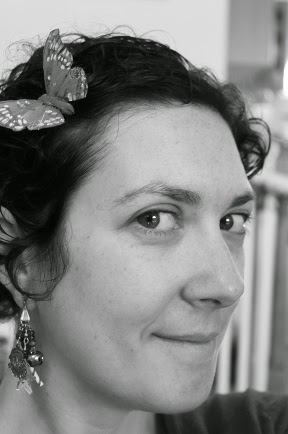
Up to now I've been coasting along using the selfie that currently resides as my profile picture here on the blog. That selfie was taken because I needed a photo for the blog. No makeup, but hey, at least my hair was done. It's gotten me this far, so I won't abandon it entirely, but it's not a professional photo, and it doesn't even pretend to be.

During my panic, I posted for tips on Facebook and spent way too much time reading headshot tips online. I even did a search on "author headshots" in images and studied them. I was a little freaked out when I discovered curly hair wasn't a thing in headshots. See, I have naturally curly hair. When I asked a friend of mine, who also happens to be a hairdresser at a salon, she said it's because curly hair can tend to look messy in professional shots.

Sad face.

Happily, there were plenty of tips out there, and I figured I'd compile them and pass them along in case any of you are in a position to spazz out over getting your photos taken.

In no particular order:

1. Get lots of sleep the night before. (Easy for them to say). Set it for a time where you are at your most awake/energetic. (Again, easy for them to say. That time starts at about 9 PM for me.)

2. Ladies, wear makeup. Fella's, sometimes you need to, as well. Consider going in to get your hair and makeup professionally done. (I had my hair done that morning by Christine at Total New You Salon, but did my own makeup, which was not my first choice, but there wouldn't have been time for me to get my makeup done since I was also working at the event.) Make sure the professional doing your hair and/or makeup is familiar with makeup for photo shoots, as there might be differences between those and every day wear.

3. Stay hydrated. (I can drink water!)

4. Know what colors work well with your skin tone. (I have no idea, but blue seems to work.)

5. Do not wear any strong patterns, such as stripes, polka dots, or florals. In addition, don't wear jewelry that will overpower your face. You want them looking at you, not your clothing, not your jewelry. It's a headshot, not a fashion shot.

6. Take an alternate outfit (or a couple) to change into to see what works best. I did have a different option, but stuck with the one I went in with. One of my fellow writers getting headshots kept the same outfit on, but added a scarf for some of the photos. Try some photos with a blazer/jacket on and some with it off. Mix it up.

7. Be mindful of your particular genre. Headshots for a romance author might be different from headshots for a horror author. A good photographer will take your genre into consideration.

8. Be comfortable. Be yourself. If you're comfortable, you're confident. If you're uncomfortable, it will show.

9. Don't look sexy. Surprising? A lot of tips I found said no cleavage and no looking sexy. Even for romance writers. They said it can turn off a number of readers, which is really the opposite of what you're going for in every way possible, right?

10. Go with a photographer you're comfortable with. Look at their websites/photos. Talk to people. Get recommendations. Chat with the photographer. Look at their website. I really, really, hate having my photo taken. I don't even like looking at photos of myself. But the photographer who did my headshots is someone I know, someone whose work I already knew of and respected, and someone who is excellent at chatting with folks and putting them at ease. That's the full package right there. (My photographer was Jared Hagan, who will be doing headshots at Pikes Peak Writers Conference this April, as well.)

11. Don't let the photographer over-edit. Editing some blemishes is fine, but you don't want to look like a weird plastic version of yourself, do you?

I'll leave you with a couple of my favorite shots from the photo shoot. The first two are the serious professional ones (and are the same photo), and the third one is aimed directly toward my writing horror. (Photographer: Jared Hagan. If you're in the Colorado Springs area or nearby and are looking for headshots, email jawhagan@hotmail.com.)


I'll see you guys as a co-host for this month's IWSG on Wednesday!

What do you think? Which photo should I go with? Any tips I missed? What has your experience with headshots been like?

May you find your Muse.

Monday, February 2, 2015

Author Website - A Discussion

When creating author platform, few things are as clear as this rule: You Must Have a Website.

By Deb, clker.com
I'm clear on that. I've asked the questions and know you should have the website well before your novel comes out. I recently asked at a marketing panel whether this applied for having short stories published in magazines and anthologies, and the answer was a resounding yes. And I can tell you from personal experience that my blog has led me to more publishing opportunities than I would have otherwise had, so it has already benefited me greatly, and I had it long before I was published in anything other than articles.

But here's the question I'm not clear on, and that I'd love feedback on from those of you who know more about it or have experience with it:

At what point is your blog being your website not enough? 


By OCAL, clker.com


I figure that I'm good with my blog having a published works tab as long as I'm just publishing short works, but do you switch to a full website with a blog when you've got a novel coming out? I've seen plenty of both, and would love to hear what people have to say on this. It feels like you'd get more eyes on it as a blog, because you can more easily draw people to it by visiting others. But it probably comes across as more professional to have a website.

Where do you draw that happy little line?

Thoughts?

May you find your Muse.